I have verified live products, cited maker/retailer specs, and a real forum thread with owner content. Here is the article.
A metal forge kit is the fastest honest way to get from "I want to try blacksmithing" to a hot bar of steel on the anvil. One box shows up with a forge body, a burner, a regulator and hose, some refractory coating, and a firebrick or two, and you can be forging the same afternoon you bolt a propane tank to it. If you want my short answer before the details: for most beginners I would start on a single burner complete kit. The Mr Volcano Hero and the Hell's Forge single burner are the two made in USA kits I would hand a new smith. The Simond Store single burner is the cheapest complete box that still does real work. I would only step up to a two burner kit like the Devil Forge DFPROF2 once I knew I needed the extra length and the air control.
Fair warning on how I write these guides. I run a propane forge and a coal forge in my own shop, and I have for about twenty-five years, so I can tell you how these things behave, where they waste gas, and what gets a beginner hurt. But I have not run down every one of these specific kits on my own bench. What follows leans on the makers' published specs, on what owners report on the forums, and on a lot of years lighting propane forges, not on a staged bench test I want you to take as gospel. If you are still deciding between fuels at all, read coal or propane first before you spend a dime, and browse the rest of the forges hub for the wider picture.
What a metal forge kit actually gets you (and what it doesn't)
The word "kit" is doing a lot of work in these listings, so let me be plain about it. A good metal forge kit is a propane forge that arrives ready to run: the steel shell, the ceramic fiber blanket already installed, a firebrick floor, at least one venturi burner, and the regulator and hose to feed it from a standard propane bottle. The better ones also throw in a tub of rigidizer and refractory mortar so you can seal the blanket properly, which you must do before you ever light it. Loose ceramic fiber is not something you want to breathe.
What a kit almost never includes is everything else you need to actually make something: an anvil, tongs, a hammer, eye protection, and gloves. That is not a knock on the kits. It is just the line the sellers draw. I will come back to the "everything else" list near the end, because leaving the shop without it is how beginners get discouraged or hurt.
The other thing to understand is that a kit is a starting point, not a sealed appliance. Every propane forge I have owned needed a little tuning: the burner air adjustment, the propane pressure, how far you choke it, whether you run one door open or both. A forge that runs rich and sooty out of the box is normal, not broken. That is the part the listings never tell you, and it is why I like kits that come from makers with a real following and a manual.
The kits at a glance
Here is the field, with only the specs the makers or their retailers actually publish. Where a figure is not published I have said so rather than guess at it. Temperature ratings are the maker's rated ceiling for the insulation, not a promise your particular burner will hit welding heat on a cold day; that depends on tuning and how many burners you feed.
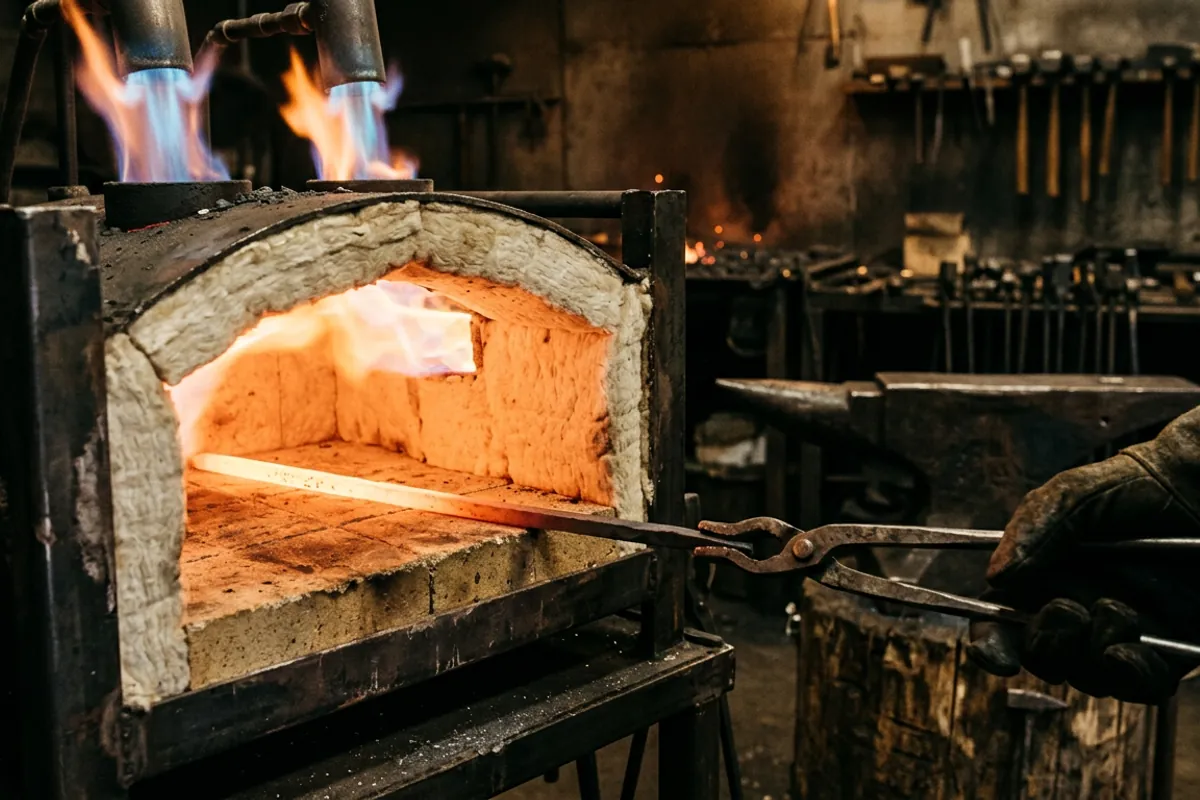
| Kit | Burners | Rated max temp | Interior chamber | Body and lining | Made in | Price tier | | --- | --- | --- | --- | --- | --- | | Simond Store single burner | 1 | 2600 F | 2.75 x 4 x 10 in | Mild steel, 1 in ceramic fiber, firebrick floor | Import | Budget | | Hell's Forge portable single burner | 1 | 2300 F | Oval, not published | Steel, 1 in ceramic fiber, firebrick | USA | Budget to mid | | Mr Volcano Hero single burner | 1 | 2600 F | Not published | Stainless, ceramic blanket | USA | Mid | | Devil Forge DFPROF2 double burner | 2 (160,000 BTU) | 2500 F | 5.6 x 5.6 x 16 in | 16 ga steel, 1 in ceramic fiber, 20 mm firebrick | Import (EU) | Mid to premium |
Sources for those figures are linked in each product section below. A quick read of the table: the two USA single burners run hot enough for general forging and small welds, the Simond Store box is the cheapest way into a real chamber, and the Devil Forge trades portability for a long two burner tunnel that swallows longer stock.
Simond Store single burner: the budget complete kit
If your only goal is to spend the least money and still get a chamber that holds heat, the Simond Store single burner is the honest answer. It is a rectangular mild steel forge with a one inch ceramic fiber lining rated to 2600 F and a one inch refractory firebrick on the floor, and it ships as an actual kit: burner, regulator with a manometer so you can read your gas pressure, hose and clamps, a stand, and even the Teflon tape and Allen key to put it together. The published interior works out to about 2.75 by 4 by 10 inches, which is small, and that is the point and the limit both. See the maker's spec sheet on the Simond Store product page.
That chamber is plenty for knives, hooks, bottle openers, small tools, and the whole beginner project list. It is tight for anything long or thick, and a single burner in a longer forge means an uneven heat you have to work around by sliding the stock. The manometer is a genuinely nice touch on a budget kit, because learning to read pressure instead of guessing is a real skill. The tradeoff is exactly what you would expect from an import at this price: fit and finish are rougher than the USA kits, and you should plan on re-sealing the blanket carefully before first light.
Check price on Amazon (paid link)
For a wider look at where these budget imports fit, I go deeper in the metal forge buying guide and the propane forge buying guide.
Hell's Forge single burner: the made in USA starter
Hell's Forge is the kit a lot of new smiths land on, and for good reason: it is built in the USA, it is a complete package, and the single burner unit is compact enough that it fits in a 14 by 14 by 14 inch box for hauling to a club meet. The oval single burner model is rated to about 2300 F, carries a one inch high density ceramic fiber blanket, and ships with a full size firebrick and a container of the maker's HELLCOAT refractory coating, per the specs collected at DudeIWantThat. The oval interior is designed to put your work in the flame's sweet spot, and owners report it comes up to heat in a few minutes.
Here is where I owe you the honest part, because it is the recurring complaint on the forums and it is worth understanding before you buy. This is a top fired design: the burner points down onto the work from above. That is fine for general forging, but smiths who make blades will tell you a burner aimed straight at the steel scales it harder than a forge where the flame swirls around the chamber. I will lay out the forum talk in the owner section below. For a beginner learning to move metal, none of that is a dealbreaker, and made in USA with a lifetime warranty is a real thing to have behind you. Whether you buy this or a Mr Volcano, I would still read the dedicated blacksmith forge kit guide for the fuller rundown.
Check price on Amazon (paid link)
Mr Volcano Hero: the other USA single burner kit
The Mr Volcano Hero is the kit I would put head to head with the Hell's Forge single, and honestly it is the one I would lean toward for a new smith who wants to start on quality without buying pieces. It is a stainless steel single burner forge built in the USA, rated to 2600 F, and it ships about as close to a complete forging setup as these kits come, per the walkthrough at CAV Auto. The complete kit reputation is earned: owners consistently note it arrives with the ceramic blanket, refractory mortar for the initial coat and future patching, a firebrick, and the hose and regulator, so there is very little to source separately before you light it.
The stainless shell is the detail I like. A mild steel forge body scales and rusts over the years the way any bare steel outdoors does; stainless holds up better in a shop that sees humidity. Rated to 2600 F, it will reach general forging heat easily and get you into small forge welds once you have your pressure and air dialed. As with any single burner, the hot spot is centered under the burner, so long or heavy stock will fight you. For the beginner project list though, this is a lot of forge in one box, and the made in USA build with a real manual matters when you are learning to tune a burner for the first time.
Check price on Amazon (paid link)
Devil Forge DFPROF2: two burners and real control
When someone tells me they already know they want to forge longer stock, damascus billets, or the occasional axe, I point them at a two burner forge, and the Devil Forge DFPROF2 is the one I would name. Devil Forge publishes real numbers, which I appreciate: two connected DFP burners rated at 160,000 BTU, a 2500 F ceiling, an interior of 5.6 by 5.6 by 16 inches, a one inch ceramic blanket over a 20 mm firebrick floor, and a lightweight 16 gauge steel body, all listed on the maker's DFPROF2 page. Each burner has its own gas ball valve and an air choke, so you can run one burner for small work or both for a long even heat, and you can actually meter the air.
That control is the difference between a starter box and a forge you grow into. Two independently valved burners let you even out the heat down a long chamber, which a single burner simply cannot do. The tradeoff is that it is bigger, thirstier on propane, and not something you toss in a 14 inch box. It is also an EU import, so shipping and lead time can be longer than an in stock USA kit. For a beginner who is certain they are staying in the craft and does not want to buy twice, though, this is the kit that keeps up.
Check price on Amazon (paid link)
What owners say about these kits
The strongest, most consistent owner signal on these top fired kits is not about whether they work, it is about the burner geometry. On the Bladesmith's Forum thread titled "Hell forges?", a member who owns a Hell's Forge double burner put it plainly: the burners are centered directly on top, they work, but "the burner positioning isn't the greatest." Another member in that same thread explained the reason it matters for blade folks: forges that aim the flame straight onto the work "tend to oxidize the steel," which means more scale to grind off. One of the site's veterans was blunter still and called the design and materials not his choice. That is the honest read: these kits absolutely forge steel, and the complaints are about refinement, not function.
The counterweight to that is the beginner reality, which also shows up all over I Forge Iron and KnifeDogs: a complete, ready to run kit gets a new smith making things instead of stalled on a build. Owner reports on the Mr Volcano Hero skew positive on lighting quickly and holding heat, with the burner being the usual thing people fiddle with, same as any venturi forge. Signal on the Simond Store and Devil Forge imports is thinner and more mixed on fit and finish, which is what I would expect at their prices and origins, so weigh that as owner chatter rather than a settled verdict. Across every brand, the single steady drumbeat is the same one I would give you in person: budget the time to tune the burner and seal the blanket, and do not expect perfection out of the carton.
One thing no forge kit decides for you is heat treat. A forge gets steel hot; it does not tell you the numbers. When you get to hardening and tempering, send the metallurgy to real testing rather than forum lore, and start with Knife Steel Nerds for the actual science on your specific steel.
What a metal forge kit does not include
This is the part that trips up more beginners than any burner adjustment. A forge kit heats steel. It does not shape it, hold it, or protect you. Before your kit earns its keep you still need four things, and I would not light the forge without them.
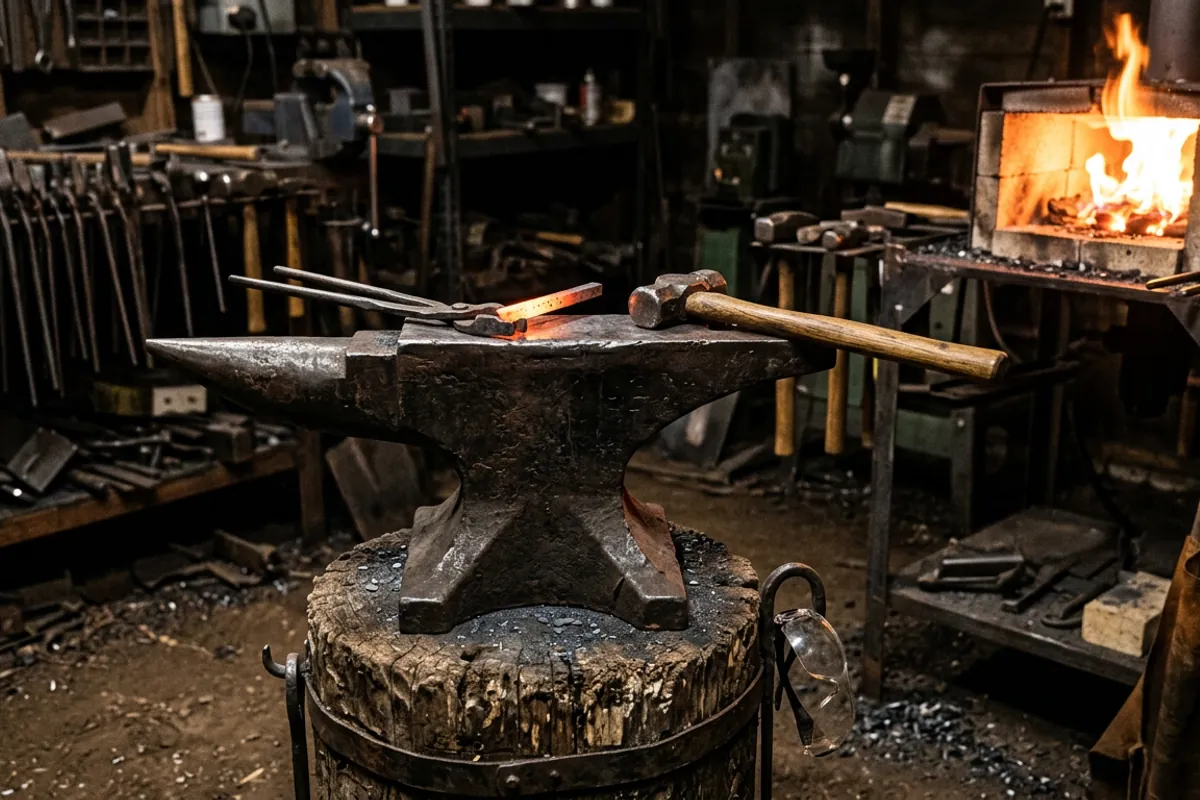
First, an anvil. You do not need a 200 pound smith's anvil to start, but you need mass under the hammer, and a cheap cast entry anvil beats hammering on nothing. If the budget is tight, a basic imported single horn anvil like this one gets a beginner moving while you save for something heavier:

Understand what that is: an entry level cast anvil, fine for learning hammer control, not a lifetime tool. Rebound and mass are what you are really buying, and more of both is always better, so read the anvil weight guide and the VEVOR anvil guide before you decide how much anvil to buy now versus later.
Second, tongs and a hammer. A single pair of tongs sized to your stock and a normal two pound hammer will start you.
Third, and this is not optional, eye protection rated to ANSI Z87.1 and clothing made of natural fibers. I will tell you why I am hard about this. Early on I quenched a blade in oil that was too cold, standing too close in a cotton shirt with no face shield, and the oil flared and took my eyebrows. I kept my eyesight by luck. Synthetics melt onto skin; cotton, wool, and leather do not. Get the blacksmith safety gear sorted before the fun starts, not after.
Fourth, ventilation. A propane forge burns fuel and produces carbon monoxide, which you cannot see or smell. Run it outdoors or in a space with real cross ventilation and a way for exhaust to leave. A garage with the door cracked is not enough. This is the safety point most kit listings skip entirely, and it is the one that can actually kill you.
What I would tell a friend
If a buddy asked me what metal forge kit to buy tonight, here is the whole answer. Start on a single burner complete kit. If you want made in USA build and a real manual, the Mr Volcano Hero is the one I would spend on; the Hell's Forge single is a close second and easier to find. If money is the deciding factor and you just want the cheapest complete box that still holds heat, the Simond Store single burner does the job, with the understanding that you are trading finish for price. Only jump to the two burner Devil Forge DFPROF2 if you already know you want longer stock and independent burner control, because otherwise you are buying and feeding more forge than a beginner needs.
The one to skip is any "kit" that shows up as a bare shell with no refractory, no regulator, and no manual, then leaves you to figure it out from a two line listing. And whichever forge you buy, the safety note matters more than the brand: eye protection rated to Z87.1, natural fibers, and real ventilation for the carbon monoxide, every single session. The forge is the easy part. Do not let a good kit talk you out of the boring gear that keeps you whole. If you want to keep reading, the beginner forge guide walks a first timer through the same decision from the ground up.