I have verified three live ASINs, maker/owner specs, and forum sources. Writing the article now.
Here is the article.
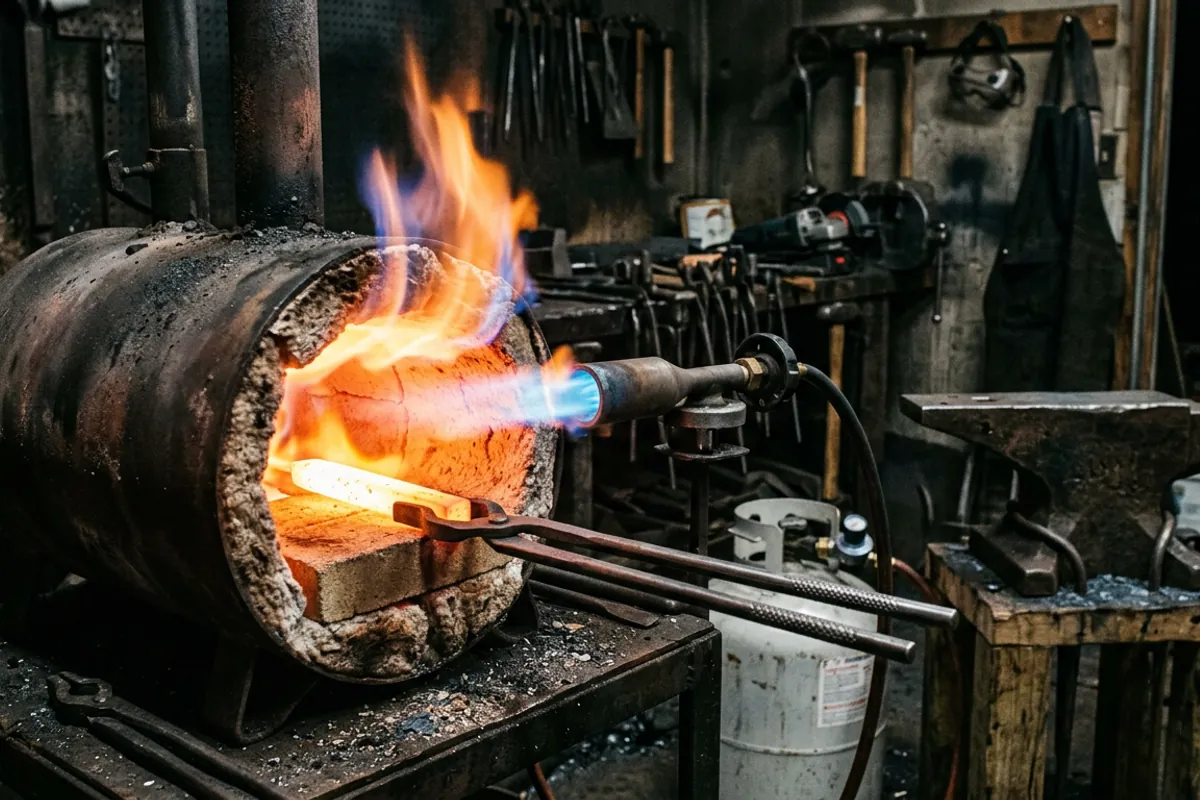
Most people who ask me about a blacksmith forge kit are picturing a box that shows up on the porch with everything they need to start hammering. That is not quite what a forge kit is, and getting that straight before you spend money saves you the most common beginner disappointment. A blacksmith forge kit, as the market uses the term, is really a gas forge plus the plumbing to run it: the forge body, one or two burners, a regulator, and a hose. It is the heat source, not the whole shop. If you understand that going in, a forge kit is a genuinely good way to start, and the one I would put in a new smith's hands is a Hell's Forge single burner. It is enough forge to learn on, made in the USA, and cheap enough that outgrowing it does not hurt.
I want to be honest about how I am judging these. I run a propane forge for most of my day-to-day work and a coal forge for heavy stock and forge welding, so I can speak to what a gas forge is like to own and what matters in one. But I have not personally lit every kit below in my own shop. These picks lean on published specs, one detailed owner review I trust, and the running arguments smiths have on the forums, all weighed against twenty-five years of running gas heat. Where I am reporting what owners say rather than what I have done, I will say so.
What a blacksmith forge kit actually includes
A typical propane forge kit ships as the forge shell lined with ceramic fiber blanket and a hard refractory coating, one or two venturi burners, a propane regulator, and a hose. You supply the propane tank, usually a standard 20 pound barbecue tank, and you supply everything else in the shop. That is the part that trips people up. A forge kit is not a starter kit in the sense of "everything to make a knife." It is the fire.
The burners on almost all of these kits are venturi burners, meaning they pull in air by the speed of the propane jet, no blower needed. That is the right choice for a beginner. They are simple, there is nothing to plug in, and they tune with a couple of adjustments. On the forums the perennial argument is venturi versus ribbon burners, and the short version is that ribbon burners are quieter and more even but are a build project, not a plug-and-play part. For a first forge, venturi is the sane default. The I Forge Iron thread on that debate is worth reading if you want the long version, but do not let it talk you into building a burner before you have ever run one (https://www.iforgeiron.com/topic/66238-the-great-debate-venturi-vs-ribbon-burners/).
If you are still deciding between gas and solid fuel at all, read my coal or propane comparison first, because a forge kit locks you into gas. For most beginners in a home shop, gas is the right first fire, and my full reasoning is in the propane forge buying guide.
The kits I would consider, at a glance
Here is the field I would actually shop, with the specs the makers and one owner reviewer publish. Where a figure is not published by a source I trust, I say so rather than repeat a marketplace number.
Scroll horizontally to see all columns.
| Kit | Burners | Chamber lining | Made in | Price tier |
|---|---|---|---|---|
| Hell's Forge single burner | 1 venturi | Ceramic wool with HELLCOAT 3000 refractory | USA | Budget |
| Hell's Forge MAX double burner | 2 venturi | Ceramic wool with HELLCOAT 3000 refractory | USA | Mid |
| Nelyrho 2 burner kit | 2 venturi | Ceramic fiber (type not published) | Not published | Budget |
The insulation figures for the Hell's Forge units come from a detailed owner review of the double burner, which lists a ceramic wool blanket with the HELLCOAT 3000 coating (https://gallivantingcraftsman.com/hells-forge-double-propane-forge-review/). The advertised "2600 F" numbers you see plastered on the budget listings are marketing claims off marketplace pages, so I am not putting them in the table as verified specs. What matters is simpler: any of these will reach forging heat, which for most carbon steel is somewhere around 1500 F to 2200 F, and a propane forge that seals up well will reach forge welding heat around 2300 F. The forge reaching temperature was never the hard part. Holding it evenly and not wasting gas is.
Hell's Forge single burner: the one I would start a beginner on
This is my pick for a first forge kit. A single venturi burner in a compact chamber is exactly the right size for learning. You will forge tapers, draw out stock, make hooks and bottle openers and your first few blades in a forge this size without ever wishing it were smaller, and a single burner sips propane compared to a double. The interior working dimensions are not clearly published by the maker, so I will not quote a number, but a single burner Hell's Forge is a small chamber by design and that is a feature for a beginner, not a limitation. Small chamber, fast heat, less gas.
It is made in the USA, which on this brand seems to come with a real refractory coating over the ceramic blanket rather than a bare fiber liner, and that coating matters for a reason I will come back to under safety. For a first forge that you might outgrow in a year, spending a little to get a coated liner and a burner that actually tunes is money well spent.
Check price on Amazon (paid link)
If you want the broader gas forge landscape before committing to this brand, my gas forge buying guide walks through single versus double burner sizing in more depth.
Hell's Forge MAX double burner: when you already know you want length
The MAX is the double burner unit, and the honest question with any two burner forge is whether you need the length. Two burners heat a longer chamber, which matters if you already know you want to forge longer blades or do a lot of scrolling and bar work where you need more of the piece hot at once. The tradeoff is real: two burners burn close to twice the gas, and a beginner heating short stock in a long chamber is paying for space they are not using.
The owner review I trust ran the double burner and reported it holds forge welding heat and heats stock far faster than solid fuel, with roughly four to six hours of run time at 20 psi with both burners going on a tank (https://gallivantingcraftsman.com/hells-forge-double-propane-forge-review/). That is a useful real number for planning. Same USA construction and coated liner as the single. I would buy this over the single only if I already knew my projects wanted the length, or if I expected to move quickly into knife work with longer blades. For most people starting out, it is more forge than the first six months need.
Check price on Amazon (paid link)
Nelyrho 2 burner kit: the budget import, honestly
There is a whole shelf of near-identical imported two burner kits under names like Nelyrho, VEVOR, ATkrou, and Mmasters. They are cheap, they are stainless bodied, and they advertise big temperature numbers. I am listing the Nelyrho because it is a representative one with an ASIN I could verify live, not because I think it is meaningfully different from its shelf-mates. These are the definition of a budget cast import: they will get you forging, and owner reports are that they run hot enough to work steel out of the box.
Where they differ from the USA-made units is in the parts you cannot see in a photo. The regulators and hoses on the cheapest kits are the first thing owners replace, the ceramic fiber liner may or may not come coated, and burner tuning can be fiddlier. None of that makes them a bad way to start if budget is the deciding factor. It makes them a forge you should plan to fuss with a little. If the choice is a cheap import kit today or no forge for another year while you save, buy the kit and start forging.
Check price on Amazon (paid link)
What owners say
I have not run every one of these down in my own shop, so here is the forum and owner signal, attributed.
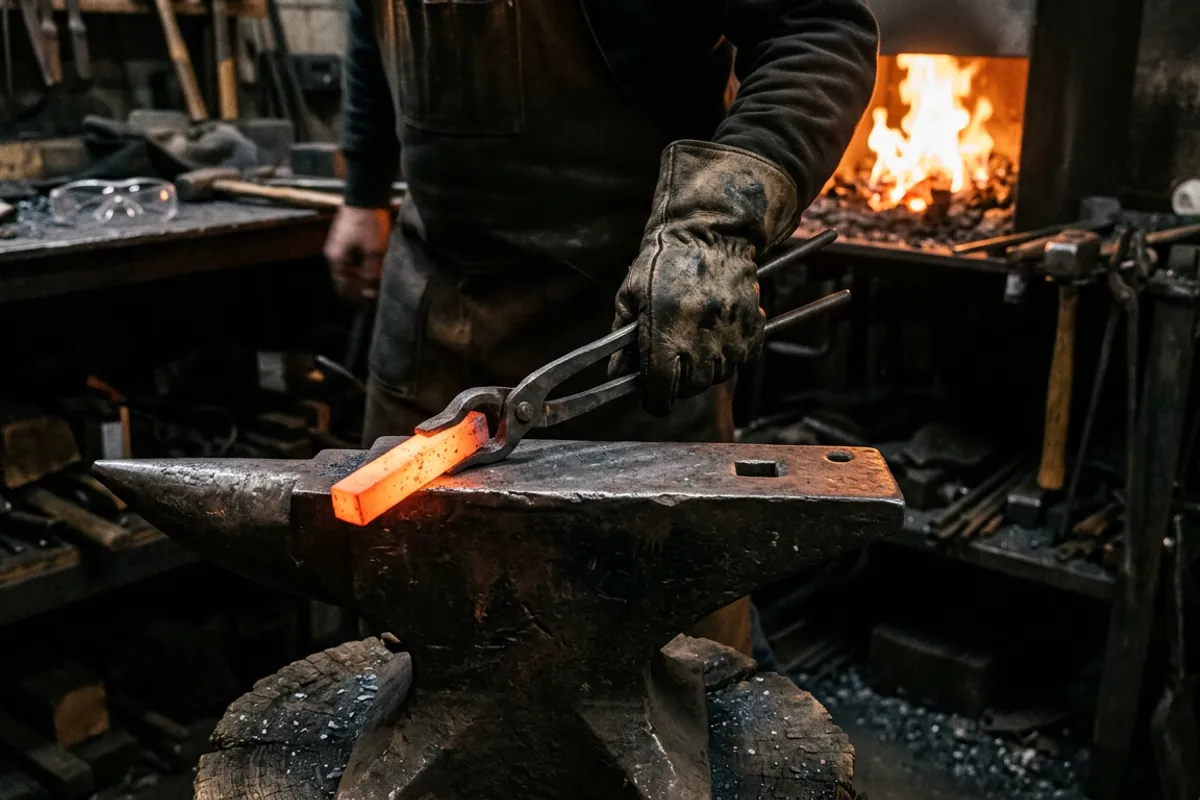
On the Hell's Forge line, the most detailed owner review I found ran the double burner hard and came away positive: easy to assemble, beginner friendly, heats far faster than solid fuel, and capable of forge welding. The same owner was blunt about the downsides, which are worth repeating: the forge is loud, the burners fire straight down rather than at an angle so heat is a little less even than an angled design, and the ceramic blanket is a lung hazard that needs its refractory coating respected (https://gallivantingcraftsman.com/hells-forge-double-propane-forge-review/). That matches what I would expect from any venturi gas forge. They are all loud, and straight-down burners are common at this price.
On the budget imports, owner signal is thinner and more mixed, which is itself the finding. The common complaint across the forums is not that they fail to reach heat, it is the accessories: regulators and hoses that owners swap for known-good ones, and liners they end up coating themselves. On burner choice generally, the I Forge Iron regulars keep circling the same point, that venturi burners are the simplest thing to run and ribbon burners are a build, not a purchase, which is the right frame for a beginner picking a kit (https://www.iforgeiron.com/topic/66238-the-great-debate-venturi-vs-ribbon-burners/). Where I am summarizing forums here, treat it as owner consensus, not a bench test I ran.
The safety that a forge kit will not put in the box
This is the part I will not soften, because a gas forge is a genuinely dangerous piece of equipment and the box does not include the things that keep you safe.
Run it outdoors or in a space with real cross ventilation, always. A propane forge produces carbon monoxide, which you cannot see or smell, and every one of these makers tells you the same thing for the same reason. A closed garage is not a forge shop.
Respect the liner. The ceramic fiber blanket inside these forges is a refractory ceramic fiber, and the loose fibers are a serious lung hazard. That is why the coated liner on the Hell's Forge units matters, and why on any kit that arrives with bare blanket you coat it with a rigid refractory before you run it hard, and you never grind or poke at the liner without a proper respirator. Flux from forge welding will also eat a bare blanket, which is another reason the coating earns its place.
Eye protection is not optional and neither is what you wear. Get safety glasses rated ANSI Z87.1 and wear them, and wear natural fibers like cotton, wool, or leather near the forge, never synthetics that melt to your skin. I learned the clothing lesson the hard way years ago when a too-cold oil quench flared up while I was standing too close in a cotton shirt with no face shield. It took my eyebrows and I kept my eyesight by luck. A forge kit ships with none of this. My full rundown is in the blacksmith safety gear guide, and I would buy the glasses before the forge.
The rest of the shop the kit does not cover
Since a forge kit is only the fire, plan for the other three things you need before you can make anything. You need an anvil, or something with mass and a hard face to hammer against. You need a hammer sized to your hand and arm, not the biggest one in the store. And you need tongs to hold hot steel, because holding short stock in your bare fingers next to a 2000 degree fire is exactly the beginner mistake that ends a session early. For how those pieces fit together on a budget, my beginner blacksmith kit guide lays out the whole first shop, and the forges topic hub collects every forge guide on the site in one place.
None of that has to be expensive or new. A length of heavy steel can stand in for an anvil while you save for a real one, and used tongs from a farm auction beat waiting until you can afford a matched set. The forge is the one piece where buying new and buying simple genuinely pays, because a leaking, badly tuned first fire is the fastest way to quit.
What I would tell a friend
Buy the Hell's Forge single burner. It is enough forge to learn everything a beginner needs to learn, it is made in the USA with a coated liner, and it costs little enough that outgrowing it in a year is not a loss. Step up to the MAX double burner only if you already know you want the length for longer blades or bar work, and go in knowing it burns close to twice the gas. The budget imports like the Nelyrho are a legitimate way to start if money is the deciding factor, as long as you expect to replace the regulator and coat the liner and you treat those as part of the purchase, not a defect.
The forge is the easy decision. The hard rule is the one the box will not enforce for you: ventilate for carbon monoxide, respect the ceramic fiber, and put ANSI Z87.1 glasses on your face before you ever light it. Get those right and a cheap forge kit will teach you to forge just fine.