I have everything verified. Writing the article now.
Verified live ASINs: B07FN651NS (Hell's Forge single burner), B09C6MVFCT (2 lb cross pein hammer), B098JRTG52 (17-inch wolf jaw tongs), B0F31SBPHH (1/2 inch A36 square bar).
Most people who want to forge a bottle opener already have most of what it takes and do not know it, so before you buy a thing, here is the honest verdict: if you are starting from nothing, a single burner propane forge, a two pound cross pein hammer, one pair of wolf jaw tongs, and a three foot length of half inch mild steel will get you a wall of finished openers for less than the cost of a decent power tool. The bottle opener is the project I hand nearly every weekend beginner because it teaches drawing out, punching, and finishing in one short heat cycle, and it does not need much gear to do well. I want to be straight about what these picks are and are not. I have forged a lot of openers on Bessie, my 148 lb Trenton, so the process talk is mine. The specific products below lean on published specs and owner reports from the forums, weighed against what I know from the shop floor, not on a bench test of every model. Where a claim is secondhand, I say so.
If you want the wider context on forges before you commit to a fuel, start at the Forges topic hub and come back.
Why a bottle opener is the right first project to buy gear for
I steer beginners to the bottle opener because it is small, it is fast, and it uses skills you will use on everything else. You draw out a taper for the handle, you punch or drift a hole, you bend a hook or a lip that actually catches a cap, and you finish it so it does not tear up a hand. All of that happens on a piece of steel you can hold in one pair of tongs, brought to heat in a couple of minutes. A first opener teaches you more per dollar of fuel than almost anything, which is why the MIT modern blacksmithing course uses it as the very first student assignment.
Because the project is forgiving, the gear does not have to be fancy. You are moving small stock at bright heat, so you do not need a big forge, a heavy hammer, or expensive tongs. That is good news for a first buy. If you are still deciding whether the whole hobby is for you, this is a cheap way to find out. For a wider look at picking projects that build real skill, I wrote up my thinking in how to pick a forging project that actually teaches you something.
The gear at a glance
Here is the short field, with only the specs the makers or suppliers actually publish. Where a maker does not state a figure, I mark it not published rather than guess.
Scroll horizontally to see all columns.
| Gear | What it is | Key published spec | Price tier |
|---|---|---|---|
| Hell's Forge single burner | Propane gas forge | 1 burner, made in USA (maker) | Mid |
| 2 lb cross pein hammer | Forging hammer | 2 lb head, wood handle | Budget |
| Wolf jaw tongs, 17 inch | Forging tongs | 17 in length, steel | Budget |
| 1/2 in A36 square bar | Mild steel stock | 1/2 in square, A36 grade | Budget |
| VEVOR single horn anvil | Cast anvil | 66 lb | Budget |
The forge is the only piece where I would spend real money, and even there the single burner is plenty. Everything else on this list is genuinely cheap, and none of it is the place to blow a budget for a first opener.
The steel you forge a bottle opener from
Start with mild steel, and do not overthink it. For a first opener I like half inch square or half inch round A36 mild bar. It draws out cleanly, it punches without fuss, and it does not need heat treating, which means you can forge the shape, wire brush it, add a finish, and be done. A three foot stick gives you several openers with enough length left over to keep your hand out of the fire while you work. A36 is the common hot rolled structural grade, and any supplier will list its makeup; OnlineMetals publishes the A36 spec if you want to read exactly what you are buying.
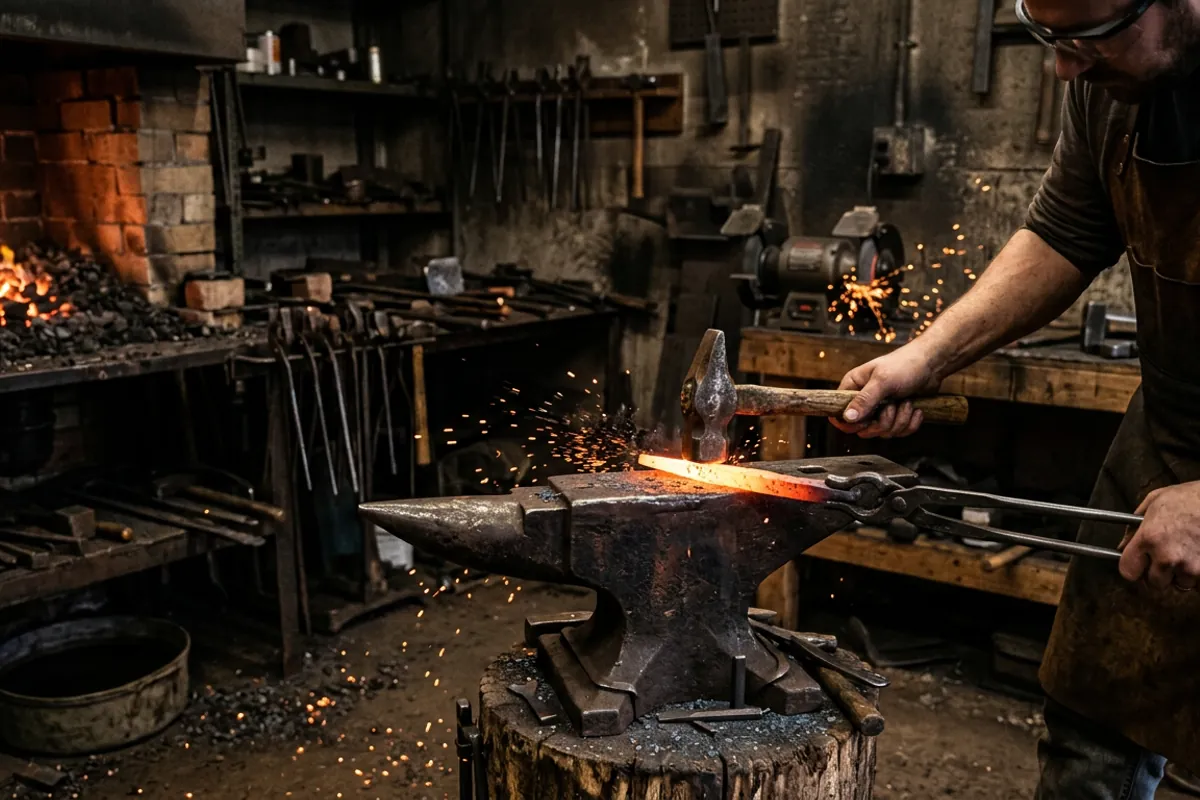
On Amazon, a made in USA half inch A36 square bar in cut lengths is about as simple as it gets for a beginner who does not have a steel yard nearby. Check price on Amazon (paid link)
You can also forge a bottle opener from a railroad spike, and a lot of people do, because the head gives you a natural handle. Just know that spike steel is low carbon and inconsistent, so it is a decorative opener, not a hardened tool. If that route interests you, I laid out what a spike actually is and is not in the railroad spike knife, honestly explained, and the same honesty applies here: it is a great cheap practice stock, not a mystery high carbon alloy. Old wrenches work too, and the I Forge Iron crowd likes them for exactly that reason in this easy project thread.
The forge that gets it hot
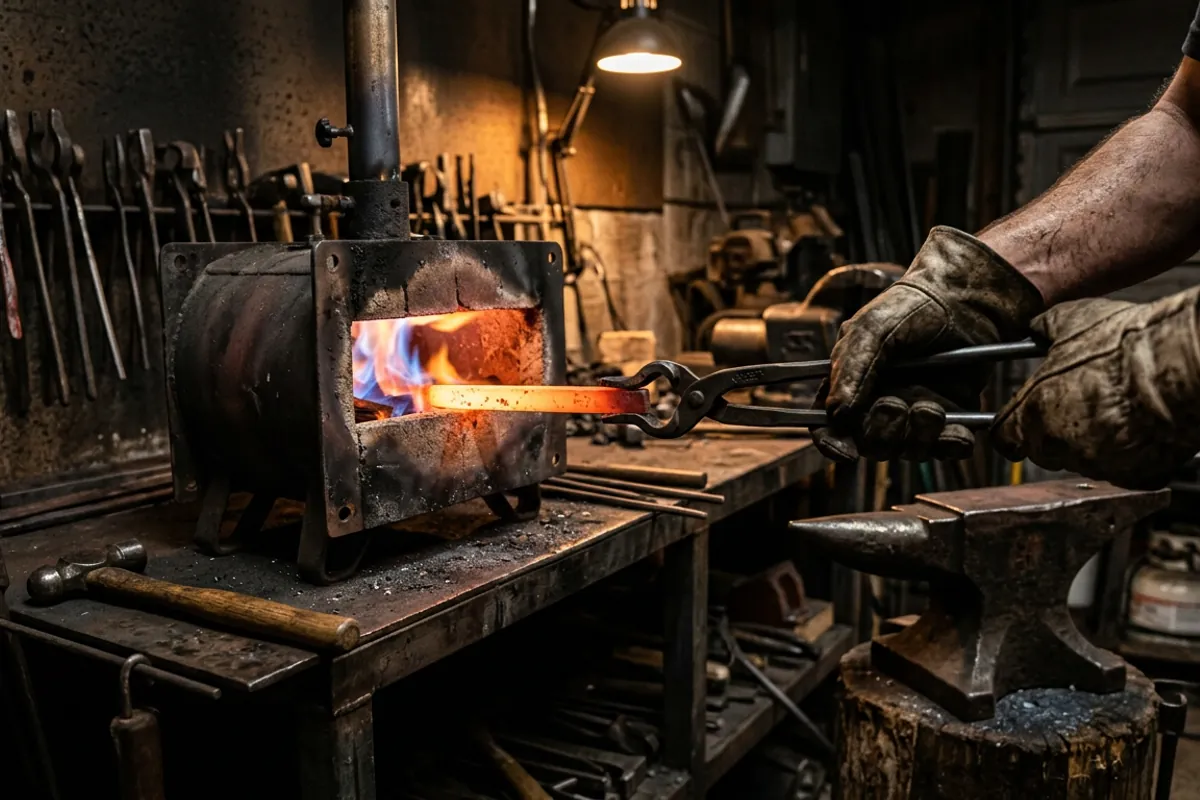
You need to bring a few inches of half inch bar up to a bright orange working heat, and for that a single burner propane forge is the right tool. It heats fast, it holds an even heat, and for openers you will never come close to needing its full capacity. The Hell's Forge single burner is the one I point beginners to most often, mostly because it is widely owned, it is made in the USA, and the maker sells replaceable parts, which matters when a burner eventually needs service. The specs I will stand behind are the ones the maker publishes on the Hell's Forge site: a single atmospheric burner unit rated for forging heat. I have not run this exact model in my own shop, so treat the durability read as owner consensus, not my bench test. Check price on Amazon (paid link)
Propane is the fuel I would pick for this project every time. It lights in seconds, it runs clean enough to forge indoors with ventilation, and there is no fire to tend, which lets a beginner think about the steel instead of the coal bed. I run both a coal forge and a propane forge in my own shop, and for small work like openers the propane forge is what I reach for. If you are weighing the two fuels for your first forge, I wrote the whole comparison in coal or propane, which first forge makes sense, and there is a deeper buyer's rundown in the propane forge I would put in a home shop.
One real safety note on the forge, because it is the piece that can hurt you: propane forges make carbon monoxide, so run one outdoors or under a hood with real airflow, never in a closed garage. That is not optional and I will not soften it.
The hammer and the tongs
For hammer weight, a two pound cross pein is the sweet spot for a beginner forging small stock. It is heavy enough to move half inch bar and light enough that you will not wreck your elbow before you finish the piece. The cross pein, the wedge shaped end, is what you use to spread and draw the handle taper, so it earns its keep on this exact project. A plain two pound hammer with a wood handle is all you need to start. Check price on Amazon (paid link)
I would not chase a fancy hammer for your first openers. Get the technique first, and let your hand tell you later whether you want something lighter, heavier, or a different pattern. When you are ready to think harder about it, I broke down patterns and weights in the blacksmith cross pein hammer I would buy first.
For tongs, one pair of wolf jaw tongs will carry you through this whole project and most of what comes after. The wolf jaw has stepped grooves in the jaws that grip round, square, and flat stock, so a single pair holds your half inch bar securely without you buying three shapes. A 17 inch pair keeps your hand well back from the fire, which is exactly what you want. Check price on Amazon (paid link)
The honest tradeoff on cheap imported tongs is that the jaws often need a little fitting to grip well. Heat the reins and jaws and close them on your actual stock to seat them, and they will hold fine. That is normal, not a defect, and it is a five minute job. I go deeper on picking a first pair in smithing tongs that actually grip.
The anvil you set it all on
You do not need a large anvil to forge a bottle opener. A small cast anvil in the 55 to 70 pound range gives you a hard face to draw out on and a horn to bend the hook or lip over, which is really all this project asks. A 66 lb single horn cast anvil is a reasonable budget starting point for openers and other small work, with the usual caveat that a budget cast anvil is a budget cast anvil: the rebound will not match a good Trenton like Bessie, and you will feel the difference the day you move to heavier stock.

Be clear eyed about what this tier is. It is fine for openers, hooks, and small decorative work, and it is a poor foundation for a shop you plan to grow into heavy forging. If you already know you are in this for the long haul, buy a good used anvil once instead of a cheap one twice. I make that case in what size anvil do you actually need and go through the specific budget castings in the VEVOR anvil I would buy, and the ones I would skip. For a first opener, though, this class of anvil will not hold you back.
The safety I will not soften
I lost my eyebrows early on to a quench oil flare up because I stood too close in a cotton shirt with no face shield, and I kept my eyesight by luck. That is why I will not treat protective gear as optional, even on a project this small. Punching a hole in a hot opener throws scale, and a hammer face can send a hot chip a surprising distance.
Wear eye protection rated to ANSI Z87.1, every heat, no exceptions. Wear natural fibers, cotton or wool or leather, near the forge, because synthetics melt onto skin instead of just burning. Keep a bucket of water and a way to kill the propane within reach. Do not pick up steel to check if it is hot, and remember that black hot steel looks exactly like cold steel and will still take skin off. None of this costs much and all of it is cheaper than an emergency room. I put the full list, and what is genuinely worth skipping, in blacksmith safety gear, what matters and what to skip.
What owners say
Because I have not run every product here down in my own shop, here is what the forums actually report, attributed and honest about the thin spots.
On the single burner propane forge, the common owner read across the blacksmithing threads is that a single burner is more than enough for small work like openers and gets criticized only when people try to heat long or heavy stock in it, which is not this project. Owners on I Forge Iron routinely describe forging openers in modest propane forges without issue in build alongs like how I make a bottle opener. The recurring complaint on budget forges generally is regulator and burner tuning, not the shell, so buy from a maker that sells parts.
On cheap cross pein hammers, the honest owner consensus is that the heads are usable but the handles and the finish are hit or miss, and many smiths reshape and rehang the head before they love it. That matches what I would tell you: the tool works, the fit and finish is where the budget shows.
On imported wolf jaw tongs, owners consistently say the same thing I said above, that the jaws need seating to your stock before they grip well. Reports of that are common enough across the tong threads that I treat it as expected, not a defect. Owner signal on any one budget tong model is thin and the listings turn over fast, so I would not lean hard on a single brand name.
On the budget cast anvils, the forums are blunt: they are fine for light work and disappointing for heavy work, and the rebound is the giveaway. That is exactly the tradeoff to expect at this price.
What I would tell a friend
If a friend asked me what to buy to forge a bottle opener, here is the short version. Get the single burner propane forge, one two pound cross pein hammer, one pair of 17 inch wolf jaw tongs, and a three foot stick of half inch A36 mild steel. If you do not already have an anvil, a small cast one will do for openers, but do not build a serious shop on it. Skip the fancy hammer, skip the multi tong sets, and skip the railroad spikes if you want a tool that actually works hard, though they are great free practice.
The one thing I would not economize on is the eye protection and the ventilation. The gear on this list is cheap; your eyes and your lungs are not. Start there, forge a few openers, and let the work tell you what to buy next.