I have verified live Amazon listings (names matching in search) and published specs from reachable sources. Writing the article now.
A portable forge is the quickest way to turn a corner of a garage into a working shop, and if I had to hand one to a new smith this weekend I would set a Hell's Forge double burner on the bench and get to work. It is built heavy, it is made in the USA, and when the job is small you shut one burner off and save gas. That is the short answer. The longer answer matters, because "portable" covers everything from a cheap hexagonal import to a unit that will outlive the person who buys it, and the right pick depends on what you forge and where you can safely run it.
Let me be straight about how I know what I know. I run a propane forge in my own shop most days, sitting next to a coal forge I keep for heavy stock and forge welding, and I have about twenty-five years of hours on the gas side. I have not personally run down every model below on my own bench. Where I talk about a specific commercial forge, I am leaning on the maker's published specs and on what owners report on the forums, weighed against what I know a propane forge should actually do. I will tell you which is which as we go.
What a portable forge really is, and who it is for
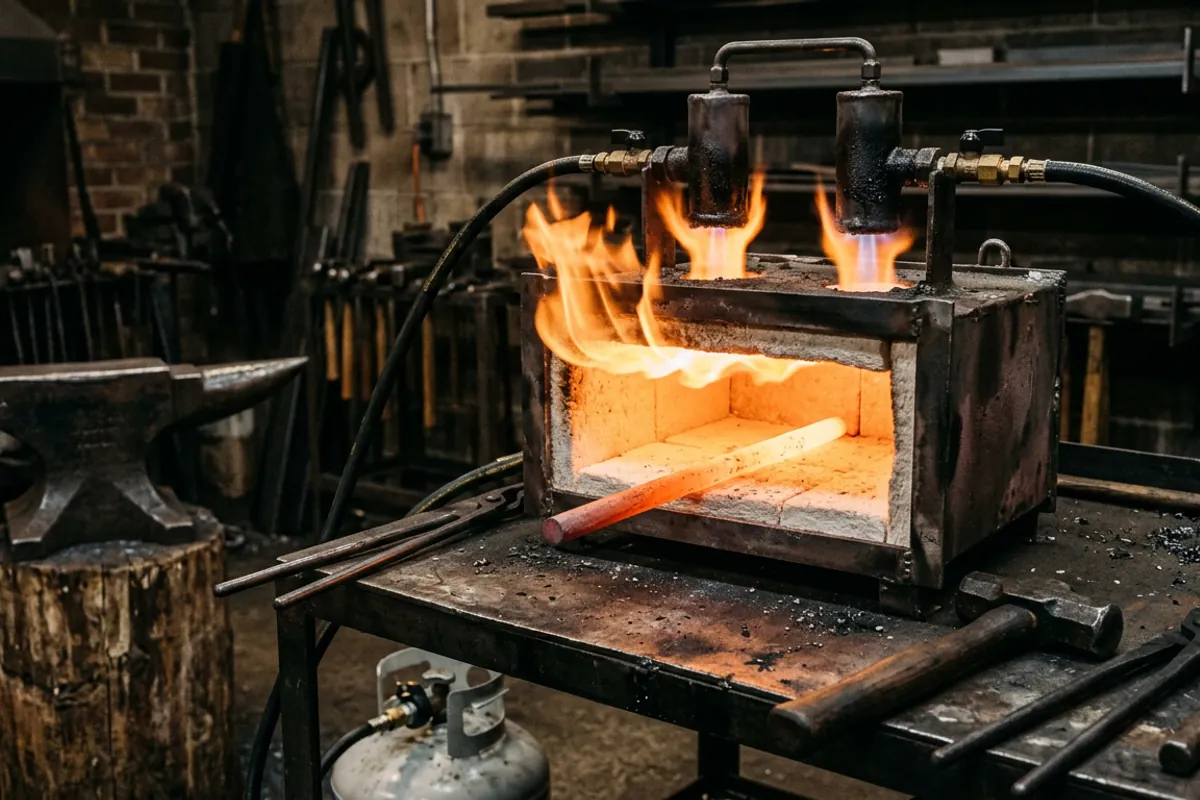
Strip the marketing away and a portable forge is a small insulated box or tube that burns propane. The shell is steel, the inside is lined with ceramic fiber blanket and firebrick, and one to three atmospheric burners point into the chamber. It hooks to a standard 20 lb propane tank through a regulator and hose, and it is small enough to carry out when you want it and put on a shelf when you do not.
Do not read "portable" as featherweight. A made-in-USA double burner runs about 38 lbs, and that is fine; portable here means it is not bricked into your shop the way a coal forge is. What you gain over solid fuel is clean, fast, even heat with a knob you can turn, which is exactly why most day-to-day home forging gets done in a small propane box. What you give up is the very top-end forge-welding heat that a well-run coal fire delivers, and the big open work area a coal forge gives you. If you are still deciding between fuels, I wrote that out in full in the coal or propane guide and the broader propane forge buying guide; the whole forges topic hub collects the rest.
A portable forge suits a beginner, a knife maker, a farrier working out of a truck, or anyone short on space. If that is you, read on.
How these portable forges compare
Here is the field at a glance. These are published figures from the makers, with "not published" where they do not state one. Temperature figures are the maker's rating, which is a ceiling under good conditions, not a promise your forge holds it all day.
Scroll horizontally to see all columns.
| Forge | Burners | Interior / size (published) | Temp rating | Body and lining | Made in | Price tier |
|---|---|---|---|---|---|---|
| VEVOR single burner | 1 | Not published | 2600°F rated | Stainless shell, ceramic fiber | Imported | Budget |
| Simond Store single burner | 1 | 18 in L x 5.5 in W x 6.5 in H interior | 2600°F rated | 16 ga SS-304, 1 in ceramic fiber plus 1 in firebrick | Imported | Budget to mid |
| Hell's Forge single burner | 1 | Not published (compact chamber) | About 2300°F | 11 ga steel, ceramic fiber plus firebrick, HELLCOAT 3000 | USA | Mid |
| Hell's Forge double burner | 2 | Overall 21 x 12.5 x 9 in, about 38 lb | About 2300°F | 11 ga steel, 1 in ceramic fiber plus two firebricks, HELLCOAT 3000 | USA | Mid to premium |
| Hell's Forge MAX double burner | 2 | Taller chamber than the standard double | About 2300°F | 11 ga steel, ceramic fiber plus firebrick, HELLCOAT 3000 | USA | Premium |
Two columns decide most of this. Interior length tells you the longest bar you can get a heat on without the ends pointing out into cold air, and burner count tells you how much chamber you can bring up to temperature at once. Everything else is build quality and price. Simond publishes its chamber and material specs plainly on its single burner forge pages, and Hell's Forge publishes its build and temperature figures across its propane forge line.
VEVOR single burner propane forge, the budget import
This is the forge people buy when the total budget for getting started is small and every dollar is spoken for. VEVOR's single burner portable is a compact stainless unit rated to 2600°F, sold as a complete little kit with regulator and hose, and it is about as cheap as a running gas forge gets.
Here is the honest read. A budget import is a budget import. The rating on the box is optimistic, the burner is not finely tuned, and you may end up adjusting the regulator pressure and the burner position to get an even heat. But it burns propane, it holds forging heat for knives and small tools, and for a lot of people it is the difference between forging this year and not. If you want to see whether smithing sticks before you spend real money, this is a rational place to start. I walk through the whole VEVOR gas forge line separately in the VEVOR propane forge guide.
Check price on Amazon (paid link)
Simond Store single burner, more chamber for the money
Simond sits a notch above the bargain imports in fit and finish, and its single burner earns a look mostly because of the numbers it publishes. The interior runs 18 in long by 5.5 in wide by 6.5 in high, the shell is 16 gauge SS-304 stainless, and the lining is a full inch of ceramic fiber blanket over an inch of firebrick, rated to 2600°F.
That 18 inch interior is the interesting part. A long, low chamber lets you heat a longer section of bar in one shot, which matters if you forge blades, fire pokers, or anything where you do not want to keep re-positioning short heats. On a single burner that long chamber is a tradeoff: one burner has to heat more space, so it comes up a little slower and you will find the sweet spot right under the flame runs hotter than the ends. That is normal single burner behavior, not a defect. For knife-length stock and general shop work it is a well-specified forge at a fair price, and the published specs are real and checkable on Simond's own single burner pages.
Check price on Amazon (paid link)
Hell's Forge single burner, a made in USA starter
If you would rather buy American and buy once, the Hell's Forge single burner is where that line starts. It is built from 11 gauge steel, lined with high density ceramic fiber and firebrick, coated with the maker's HELLCOAT 3000 rigidizer, and rated to about 2300°F. It arrives close to ready to run.
Do not let the lower rated temperature spook you next to the 2600°F imports. Steel forges at a yellow heat, roughly 1900 to 2200°F for most work, and a 2300°F forge reaches that with room to spare; the number on an import box being higher does not mean it holds more useful heat in the chamber. What you are paying for here is a heavier shell, a better coating, and a company that answers the phone. For a beginner who knows they are in this for the long haul and only forges small stock, a single burner made in the USA is a clean, honest starter. It is the natural entry to the same family as the double below, and it slots in nicely with the picks in my beginner forge guide.
Check price on Amazon (paid link)
Hell's Forge double burner, the one I would put in most shops
This is my default recommendation for a home smith who is serious. Two burners, an 11 gauge steel body, an inch of high density ceramic fiber over two full firebricks, HELLCOAT 3000 lining, rated to about 2300°F, made in the USA. The overall unit runs roughly 21 by 12.5 by 9 inches and about 38 lbs, so it carries in two hands and stores on a shelf.
The reason I point most people here is flexibility. Two burners heat a longer, more even chamber, so you can bring a good length of bar up to temperature at once and work a full heat before it drops. And when the job is small, you shut one burner off and run it like a single, which saves gas and is exactly what a lot of owners end up doing. Owners of the double report a 20 lb tank lasting roughly 4 to 6 hours with both burners running hard, less if you are wide open all day. It will forge anything a home shop throws at it, and with careful burner tuning it will reach forge-welding heat, though welding in any gas forge is fussier than in coal. For most readers, this is the buy.
Check price on Amazon (paid link)
Hell's Forge MAX double burner, when you need more heat
The MAX is the same idea with more chamber and more burner behind it, aimed at people who need to heat bigger sections or want more headroom for taller work. Same 11 gauge construction, same made-in-USA build, a larger interior than the standard double.
I would only steer you here if you have a specific reason: you are forging thicker stock, you are doing damascus billets, or you already know the standard double is not quite enough forge for your work. For a beginner it is more forge than the first year of projects will use, and a bigger chamber costs more propane to keep hot. Buy the capacity you will actually use, not the capacity that sounds impressive. If your real goal is knife work specifically, compare it against the dedicated picks in my knife making propane forge guide before you spend up.
Check price on Amazon (paid link)
Burner count, chamber size, and fuel
The single-versus-double question comes up constantly, so let me settle it the way the forums do. On I Forge Iron, the recurring advice in threads like one burner or two is simple: match the burner count to the chamber you actually need heated, not to a bigger-is-better instinct. One well-tuned burner handles a small chamber and small stock with the least gas. Two burners buy you a longer, more even work zone, at the cost of more propane.
The catch that trips up beginners is buying a big double burner as a first forge and then paying to heat air. That exact pattern shows up on I Forge Iron in threads like using only one burner of a double burner forge, where owners who jumped straight to two burners end up running just one to save fuel on small work. That is the strong argument for a double that lets you shut a burner off: you get the small-forge economy and the big-forge reach in one box. On fuel, plan on a 20 lb tank for real sessions rather than the little green camp bottles, and expect the tank to frost up and lose pressure if you run it hard in the cold, which is a propane physics problem, not a forge problem.
Running a propane forge without getting hurt
This is the part I will not soften, because a gas forge has hazards that do not announce themselves.
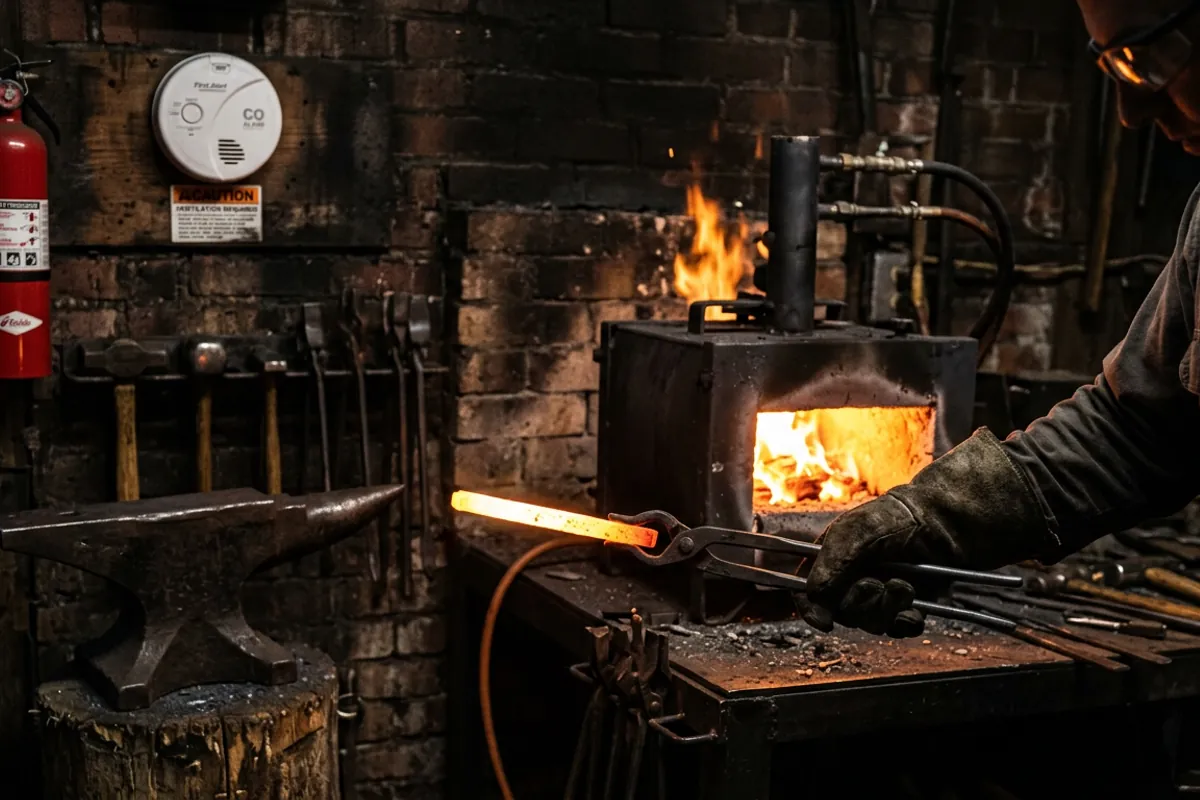
First, carbon monoxide. Every propane forge produces it, and you cannot see or smell it. Run a portable forge outdoors or in a space with real cross-ventilation, never a closed garage, and put a CO alarm where you work. This is not optional caution, it is the difference between a good day and not waking up.
Second, your eyes. Wear impact protection rated to ANSI Z87.1 any time you are at the forge, and for a gas forge add a shade or a didymium lens, because staring into a bright chamber all day is dosing your eyes with glare and infrared you will regret in twenty years. I go through the whole PPE list in the blacksmith safety gear guide.
Third, what you wear. Natural fibers only near heat, cotton or wool, never synthetics that melt onto skin. I learned that the hard way early on: I quenched a blade in oil that was too cold, standing too close in a cotton shirt with no face shield, the oil flared, and it took my eyebrows. I kept my eyesight by luck, not by being careful. Be careful.
Last, the mechanical stuff. The forge shell gets hot enough to burn you, so mind where you set your hands and your hose. There is a jet of flame at the openings, the "dragon's breath," so keep it clear of anything that will catch. Leak-test the regulator and hose connections with soapy water before every session, watch for bubbles, and keep a fire extinguisher within reach. None of this is hard, and all of it is the price of admission.
What owners say
Honest note first: deep, model-by-model forum testing of these specific forges is thinner than you would like. Most brand-level signal comes from buyer reviews and setup videos rather than long torture threads, so I will not dress owner reviews up as bench data.
What the forums do agree on, loudly, is the sizing question above. The steady I Forge Iron consensus across the burner-count threads is that beginners routinely buy more forge than their work needs, and that a smaller or shut-down chamber is cheaper and easier to run for small stock. On the Hell's Forge units specifically, the common owner note is that they are well-built starters that arrive nearly ready to run, with clean, controllable heat; the recurring gripe is that the burners fire straight down into the floor rather than at an angle that swirls the heat, which owners work around and which has not stopped a lot of people from making good knives in them. On the budget imports like VEVOR, the consensus is exactly what you would expect: a running forge for little money, with a burner and regulator you may have to fiddle with to get an even heat. That tracks with everything I know a cheap atmospheric burner does.
What I would tell a friend
Buy the Hell's Forge double burner if you are serious and want one forge to grow into, because it heats a real length of bar, drops to a single burner when you are being frugal, and is built to last. Buy the VEVOR single if the budget is genuinely tight and you just need to find out whether smithing sticks; it is a rational first step, not an embarrassing one. Look hard at the Simond single if you want a long chamber for blades without paying up, and skip the Hell's MAX unless you already know the standard double is not enough forge for your work.
Whichever you pick, spend the extra few dollars on the CO alarm, the Z87.1 eye protection, and a cotton shirt before you ever light it. The forge is the cheap part of staying in this hobby with your eyesight and your lungs intact. Get that right, and any of these will make you plenty of heat.