The short version
If you want one propane gas forge for a home shop and you do not want to think about it for very long, buy a two burner unit with a chamber around 6 inches wide and put the money you save into a decent regulator, a hose you inspect, and eye protection. My own gas forge does most of the work in my shop, and after years of running one alongside a coal forge I can tell you the thing that decides whether you like a forge is chamber size and how well the shell is insulated, not the brand stamped on the side.
Before you read one more line: I have not run these specific models down in my own shop. I run a propane forge and a coal forge, so I can tell you how the fuel behaves, what fails, and what a chamber size means in practice. The picks below lean on published maker specs and owner reports off the forums, weighed against that experience. Where a spec is not published anywhere I could open, I say so instead of filling in a number.
If you have not settled the fuel question yet, read coal or propane first. The rest of the forge cluster lives at the forges topic hub.
What a propane gas forge actually is, and what it is not
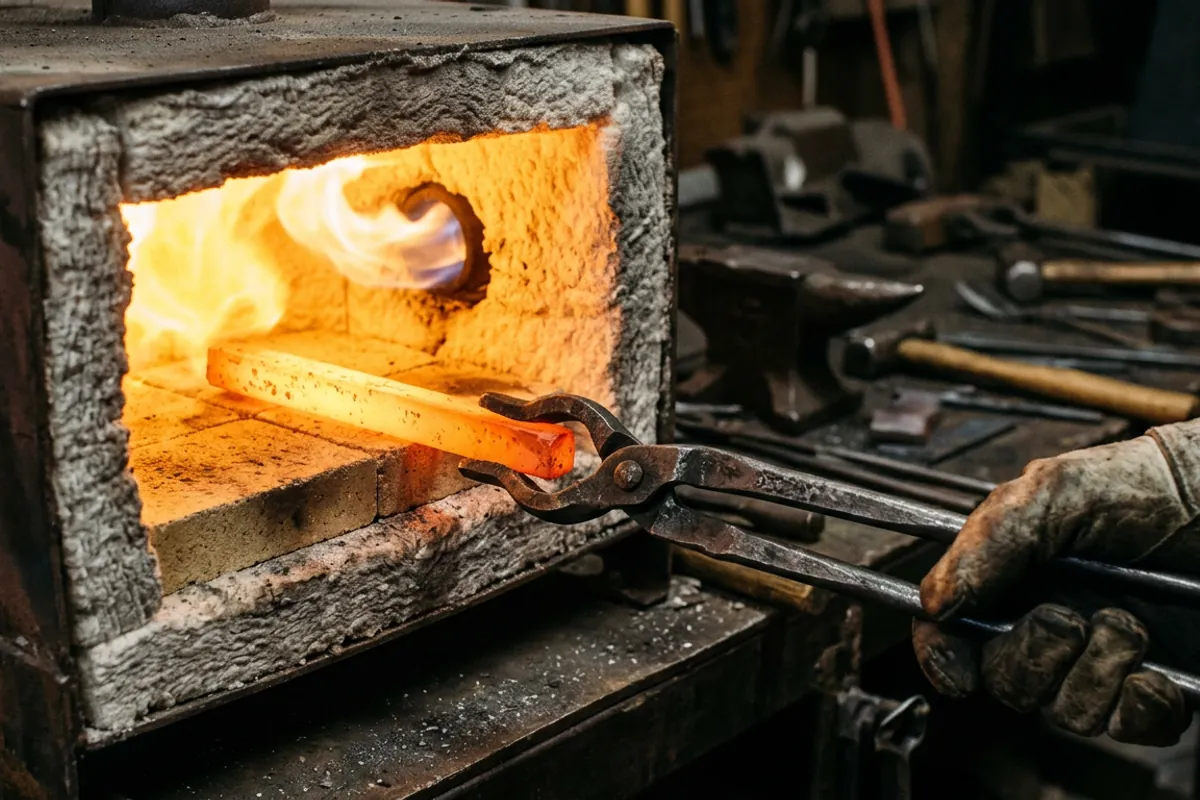
A propane gas forge is a steel shell lined with ceramic fiber blanket, with one or more venturi burners poking through the top or side. Propane comes out of a tank through a regulator, draws air in through the burner throat, and burns inside the chamber. The blanket keeps the heat in. That is the whole machine. There is no magic in it, which is why a $200 forge and a $500 forge can both get steel to forging heat.
What separates them is real, though:
- Chamber volume. A small chamber gets hot fast and sips gas. A big chamber takes longer to come up and eats gas, but it will take a 3 foot bar or a pair of tongs jaws. You cannot forge what does not fit.
- Insulation and coating. Bare ceramic blanket does not last. It needs rigidizer and a refractory coat over it, and most kit forges ship you the coating in a tub with instructions to apply it yourself.
- Burner tuning. A naturally aspirated venturi burner is tuned with a choke. Some units arrive tuned close, some need fiddling. This is the single most common owner complaint across every brand.
- Whether it forge welds. Most one burner kit forges will reach forging heat all day and struggle at welding heat. Two burners and a tight chamber change that.
What a gas forge is not: it is not an indoor appliance. It burns fuel and makes carbon monoxide, and CO is colorless, odorless, and can put you down in minutes without warning, per the OSHA carbon monoxide fact sheet. More on that below, because it is the part of this article that actually matters.
Specs side by side
Published figures only. Where the maker's site would not load for me or the figure is not stated, the cell says so.
Scroll horizontally to see all columns.
| Forge | Burners | Chamber (published) | Claimed max temp | Lining | Price tier |
|---|---|---|---|---|---|
| Devil-Forge DFSW | 1 (80,000 BTU DFP) | 6 x 4.8 x 10 in interior, 20mm firebrick floor | 2500 F | 1 in ceramic blanket, 21 gauge shell, about 10 lb | Budget |
| Devil-Forge DFSW2 | 2 (160,000 BTU combined) | Longer chamber than the DFSW; exact figure not confirmed on a maker page I could open | 2500 F | 1 in ceramic blanket | Budget |
| Hell's Forge HF2 | 2 | Oval chamber; maker site would not load for me, figures circulate through resellers only | 2300 F and up per maker listing copy | 1 in ceramic blanket plus Hellcote 3000 you apply | Mid |
| Hell's Forge MAX | 2 | Not confirmed on a maker page I could open | Not confirmed | 1 in ceramic blanket plus Hellcote 3000 | Mid |
| Mr Volcano Hero | 1 | Not published on a maker page (their forge collection page is currently empty) | Not confirmed | Superwool XTRA blanket, rigidizer and Satanite in the kit | Mid |
| Majestic 2 Burner Artisan Deluxe | 2 | 7.5 in deep x 11 in wide x 4.5 in tall, side access door | Not stated on the product page | Not stated on the product page | Step up, $500 at the maker |
Devil-Forge specs come from the maker's own DFSW product page. The Majestic figures come from the maker's 2 Burner Artisan Deluxe page. For NC Tool and other Majestic chamber sizes, Brown County Forge published a useful rundown of gas forges under $500 with chamber dimensions listed per model.
Notice how many cells say "not confirmed." That is the honest state of this market. Several of these brands sell almost entirely through the marketplace and keep no reachable spec sheet of their own, and I will not copy a number off a product listing and dress it up as a published spec.
Devil-Forge DFSW: the cheapest honest way in
The DFSW is a single burner box forge with a 6 x 4.8 x 10 inch interior, a 1 inch ceramic blanket lining, a firebrick floor, and a shell of 21 gauge steel that weighs about 10 pounds. The burner is rated 80,000 BTU with an adjustable ball valve and air choke, and the maker states an operating range of 1 to 25 psi and a maximum of 2500 F. Those all come off the maker's own page linked above.
Who it suits: someone making knives, hooks, bottle openers, and small tools, working stock under about 10 inches at a time, who wants to find out whether they like this before spending real money. The 21 gauge shell tells you what you are buying. It is thin. It will warp with hard use and it will not enjoy being knocked off a bench.
The thing I like about the Devil-Forge listings is that the maker publishes actual numbers, including the burner pressure range, which is more than most of this market does. The thing to watch is that a 1 inch blanket in a thin shell means the outside gets hot and stays hot, so it wants a stand and clearance from anything that burns.
Check price on Amazon (paid link)
If you already know you want a longer chamber, the same maker sells the two burner DFSW2 with a combined 160,000 BTU rating and a longer chamber, which is a better buy for anyone who plans to forge weld or to work a bar rather than a billet.
Check price on Amazon (paid link)
Hell's Forge HF2 and MAX: the long chamber workhorse
Hell's Forge is the name that comes up most when a beginner asks the internet for a gas forge, and the HF2 double burner is the model people mean. The maker's listing copy describes an oval chamber, a 1 inch high density ceramic fiber blanket, two firebricks for the floor, a container of Hellcote 3000 refractory coating that you apply yourself, and temperatures above 2300 F with both burners lit. I want to be square with you: the maker's own website would not load for me while writing this, and the dimensions you see quoted around the web trace back to reseller copy rather than a spec sheet I could open, so treat them as listing claims and not as verified figures.
What the design is actually about is the oval chamber and the vertical burner firing. An oval gives you a usable hot zone without the wasted corner volume of a square box, and it is longer than most single burner boxes, which is what you want for anything longer than a knife blank. Two burners with separate valves also means you can run one for small work and save gas.
Check price on Amazon (paid link)
The MAX is the larger sibling, the same idea with more chamber. If your work is mostly tongs, tomahawks, and longer bar stock, that is the direction to go. If you are making paring knives, it is more forge than you need and more propane than you want to buy.
Check price on Amazon (paid link)
The coating step is not optional on these, and it is the step new owners skip. Bare blanket in a running forge does not survive. On the I Forge Iron rigidizer thread, the repeated point from experienced members is that ceramic wool is vulnerable at high temperature and that combustion gases getting into an uncoated lining will trash it quickly, while rigidizer makes the material less permeable and helps keep those gases out. Do the rigidizer, do the coating, cure it slowly per the instructions in the box.
Mr Volcano Hero and Hero 2: the kit that includes the coating
Mr Volcano sells the Hero as a single burner stainless forge and the Hero 2 as the double burner version, both as complete kits: 1 inch 8 pound density Superwool XTRA blanket, rigidizer concentrate, Satanite refractory mortar for the first coat plus extra for maintenance, a firebrick, and a 6 foot hose with regulator. The insulation choice is the interesting part. Superwool XTRA is a low biopersistence fiber rather than standard refractory ceramic fiber, which matters for what you are breathing when you handle and cut the blanket.
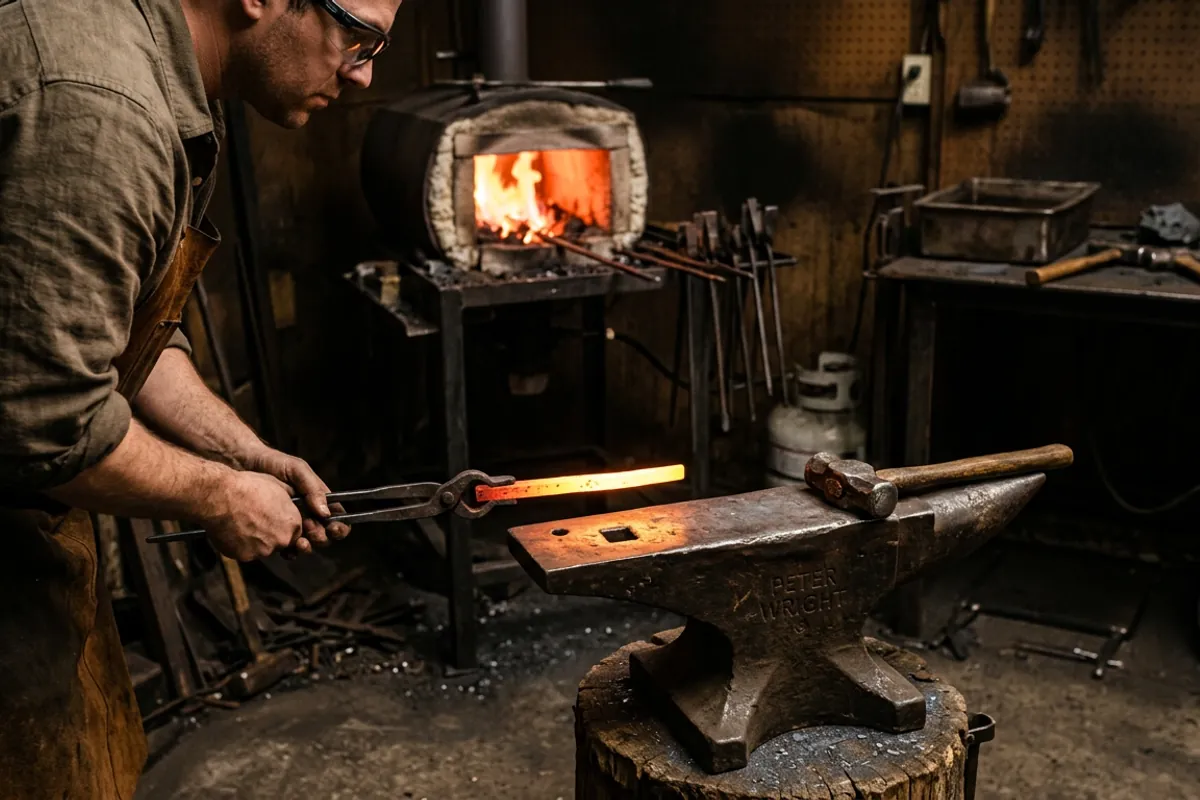
One honest availability note, checked today: the Mr Volcano propane forge collection page currently shows no products at all. The marketplace listings are still live, but if a brand's own storefront is empty, plan on parts and replacement blanket being harder to source down the road. That is a real risk with a forge you intend to reline in three years.
Check price on Amazon (paid link)
Check price on Amazon (paid link)
When to skip the kit forges and buy a Majestic or an NC Tool
There is a tier above all of this, and it is not expensive enough to ignore. The Majestic 2 Burner Artisan Deluxe lists a 7.5 inch deep by 11 inch wide by 4.5 inch tall chamber with a side access door and independent burner valves, at $500 on the maker's site as of this writing. Brown County Forge's rundown lists the NC Tool Whisper Deluxe at a 3 x 12 x 6 inch chamber and the Whisper Baby at 3 x 7 x 6.5 inch, and the author's take on the Whisper Deluxe after real use was simply that it was easy to light, it got hot, and it stayed hot.
The case for spending there instead: heavier shells, doors that let long stock pass through, burners that arrive tuned, and a company that answers the phone when a burner assembly cracks. The case against: it is roughly double a kit forge, and a beginner who quits in six months has lost more money. If you already know you are staying, buy up front. If you are still finding out, the budget forge is the right answer and there is no shame in it. I would rather you have a cheap forge and a proper anvil than the reverse.
What owners say
I have not run these units, so here is the owner signal as I actually found it, with the thin spots called out.
The strongest and most consistent forum consensus is not about brands at all, it is about burners and lining. The long running venturi versus ribbon burner debate on I Forge Iron and the ribbon burner efficiency thread come back to the same conclusions: naturally aspirated venturi burners are simple and need no power, ribbon and blown burners run quieter and can hold heat at very low pressure, and efficiency claims get thrown around loosely. Members in the efficiency thread describe running small ribbon burner forges at fractions of a psi while much larger forges run at several psi, which tells you chamber volume drives gas use more than burner branding does. KnifeDogs has a similar burner efficiency thread covering the same ground from the knifemaking side.
On the specific mass market kit forges, forum signal is thinner than the review sites make it look. What repeats in owner writeups is fairly narrow and fairly consistent: gas forges are loud, they are clean compared to coal, temperature control is easier than solid fuel, and every one of them tells you to use it outdoors or with serious ventilation. The complaints that repeat are the ones you would expect from a $200 machine: burner tuning out of the box, thin sheet metal shells, and owners who ran the forge before applying the refractory coating and then wondered why the lining crumbled.
Where owner reports and my own experience agree completely: flux eats forge linings. If you plan to forge weld with borax, expect to reline, and coat the floor accordingly. That is not a defect in any particular brand.
Safety, and this part is not negotiable
I lost my eyebrows early on to an oil quench I got wrong, standing too close in a cotton shirt with no face shield. That was a quench tank, not a forge, but the lesson transfers: the failure comes fast and you do not get a warning.
For a propane gas forge specifically, the New Jersey Blacksmiths Association's propane forge use and safety page covers the routine properly and I will not improve on it. The parts that matter most:
- Run it outdoors or under a roof with open sides, or with forced ventilation. Carbon monoxide is a potent poison, and their advice is blunt: if you get a headache while working, get out into fresh air immediately. A CO alarm in the shop is cheap insurance, not a substitute for airflow.
- Inspect the cylinder valve, the regulator and its O ring, and the hose every time. Regulators are mechanical, they fail, and they hate heat and rough handling.
- Leak test with soapy water on the fittings before you light it. Bubbles mean stop.
- Keep the cylinder outdoors, away from the forge, and standing. A tipped cylinder can feed liquid propane into the regulator.
Eye protection: ANSI Z87.1 rated, always, and shaded lenses for staring into a lit chamber. Natural fibers only near heat, because synthetics melt into skin. Full detail is in the safety gear guide, and the shop layout side of this, including where the tank goes and how far the forge sits from the wall, is covered in blacksmith shops explained.
One more: cutting and handling ceramic fiber blanket makes airborne fiber. Wear a respirator when you reline, and rigidize the blanket before you run the forge so it stays put.
What I would tell a friend
Buy the two burner. Almost everyone who buys a single burner box forge to save a hundred dollars ends up wanting a longer chamber inside a year, and burner valves let you run one burner when the work is small, so you are not stuck paying for gas you do not need.
If money is genuinely tight, the Devil-Forge DFSW is the one budget unit in this group whose maker publishes real, checkable numbers, and that counts for something. If you want the long chamber that most home shop work actually needs, the Hell's Forge two burner units are the default choice for a reason. If you already know blacksmithing is sticking, skip both and buy a Majestic or an NC Tool with a door, and be done shopping.
The one I would skip: any listing that publishes no chamber dimension anywhere. A forge you cannot size is a forge you cannot plan work around.
And the buying note that matters more than any of it: budget for the coating, the rigidizer, a respirator for reline day, Z87.1 eye protection, and running the thing outside. A forge that gets you hurt is not a bargain at any price. If you are still assembling the rest of the shop, the starter tool list and the broader forge buying guide will keep you from buying twice.