I have solid verified ASINs, maker-published specs, and real owner threads. Writing the guide now.
Here is the article.
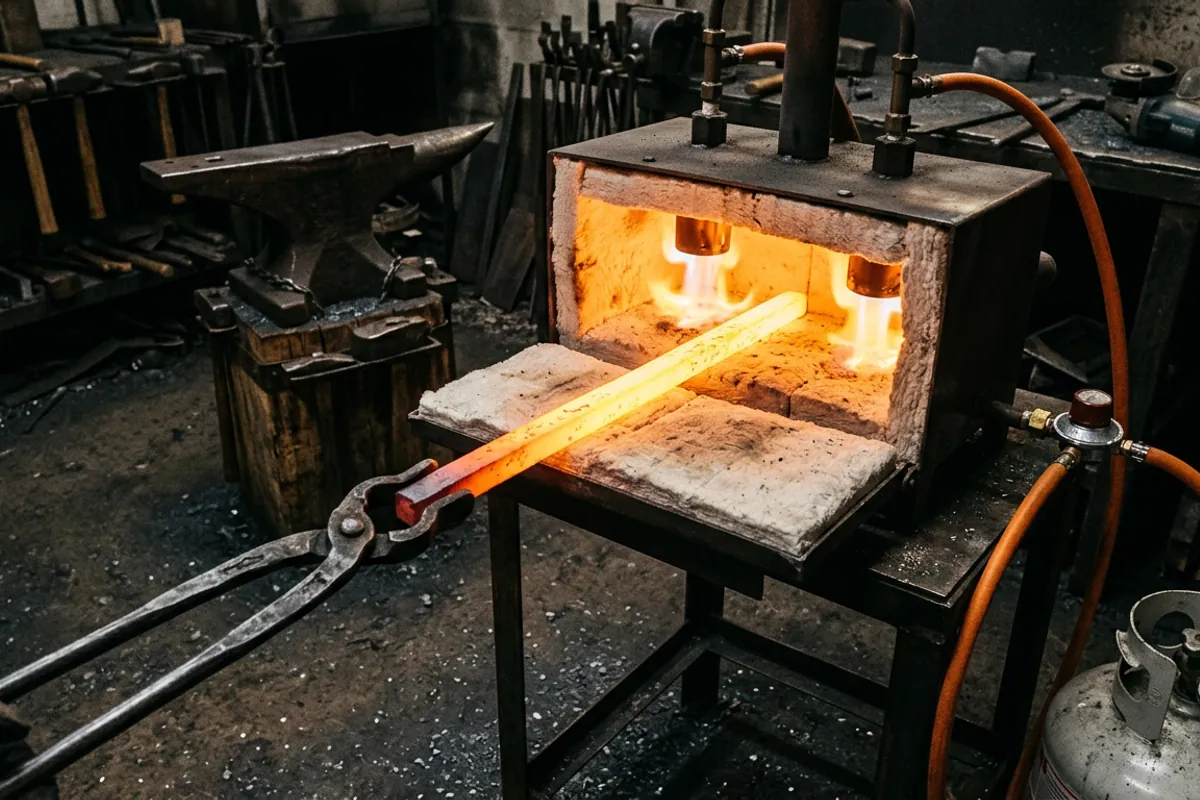
If you are shopping a blacksmith forge for sale and you want the short version, buy a single-burner propane forge and get to work. For most people asking me this, that is the honest answer: a small gas forge lights in a minute, holds an even heat, wastes almost nothing while you learn, and does not ask you to master fire management before you have hit hot steel once. I run two forges myself, a coal forge for heavy stock and forge welding and a propane forge for most of the day-to-day, so I am not talking you out of coal. I am telling you where to start.
Fair warning on what this guide is and is not. I have put a lot of hours on my own two forges, but I have not run every model below down in my shop. The picks here lean on published maker specs and on what owners actually report on the forums, weighed against what I know about how these fuels and burners behave. Where a number is the maker's published figure, I cite it. Where owner signal is thin, I say so. That is the deal.
What you are actually choosing when you shop a forge
Two decisions matter, and everything else is noise. The first is fuel: coal (or charcoal) versus propane. The second, if you go propane, is one burner or two.
Fuel first. A propane forge trades control of your fire for convenience. You turn a valve, it lights, and ten minutes later the chamber is at an even orange heat with no fussing. A coal forge gives you a hotter, more concentrated fire you can shape, which is why I still reach for coal when I am forge welding or drawing out heavy bar, but it wants tending, it makes smoke your neighbors will notice, and it has a real learning curve of its own. If you are brand new, propane removes a whole category of things to get wrong. I lay the full tradeoff out in the coal or propane guide, and it is worth reading before you spend a dime.
Burner count next. A single burner heats a small chamber fast and sips propane. A double burner heats a longer chamber and lets you get more of a long piece hot at once, at the cost of roughly double the gas. The forum consensus on this is steady: most beginners are forging knives, hooks, and small tools that fit inside a single-burner chamber, and a single burner does that on less fuel. You step up to two burners when your work gets longer than the box, not before. The beginner propane forge guide walks through sizing that to your actual projects.
One more thing before the table: a forge is a forge, not a whole shop. You still need an anvil, a hammer, and tongs before you make anything, and a cheap forge next to a good anvil beats the reverse. If you have not sorted the anvil yet, start with the anvil buying guide and come back.
The forges at a glance
Every figure below is a published maker or retailer spec, cited in the per-forge sections. Where a maker does not state a number, it reads "not published" rather than a guess.
Scroll horizontally to see all columns.
| Forge | Fuel | Burners | Interior chamber | Rated to | Price tier |
|---|---|---|---|---|---|
| Simond Store single burner | Propane | 1 | 4.8 x 4.8 x 10 in | 2600 F | Budget |
| Hell's Forge single burner | Propane | 1 | Not published | Not published | Mid |
| Hell's Forge MAX | Propane | 2 | 6 x 4.75 x 19 in | 2300 F | Mid |
| Simond Store coal forge | Coal / solid fuel | Hand blower | Not published | Not applicable | Budget |
Notice the temperature ratings. Both propane brands publish numbers well above the roughly 2000 F you forge carbon steel at and above the temperature that matters for most heat treating, so neither is going to leave you cold. The rating is a ceiling, not a promise your particular burner tune hits it on a windy day. Treat it as headroom.
Simond Store single burner propane forge
This is the one I would point a first-time buyer at when the budget is tight. It is a small rectangular gas forge built for exactly the work a beginner does: knives, hooks, small tooling, bottle openers, the projects that actually teach your hands. Simond publishes the interior chamber at 4.8 inches high by 4.8 inches wide by 10 inches long, built from 16 gauge SS-304 stainless with a one inch ceramic fiber blanket over one inch firebrick, rated to 2600 F, per the Simond Store product page. Those are honest numbers for a small forge, and the two doors let you pass longer stock through and choke the openings down to hold heat.
The tradeoff is the tradeoff of every budget import forge. Fit and finish is fine, not fancy, and the burner tune out of the box is a starting point, not a finished thing. Plenty of owners re-seat the burner and adjust the regulator pressure to chase an even, blue-cored flame. That is normal, and learning to tune a burner is a skill you want anyway. For the money, it puts hot steel in front of you the same day it arrives.
Check price on Amazon (paid link)
Hell's Forge single burner
Hell's Forge is the name that comes up most often on the American forums, and their single-burner unit is the step up from a bare import for a smith who wants a forge assembled and QC'd closer to home. The listing advertises it as made in the USA, which is part of why it carries a higher price than the Simond equivalent. I could not pull the maker's chamber dimensions or temperature rating from a page I trust, so those read "not published" in the table above rather than a number I made up. Do not let a review site's guess stand in for a spec the maker did not state.
What I can tell you from how these forges behave and what owners report: a single-burner Hell's unit is a capable small forge for knife and tool work, and the brand's build quality gets steadier praise than the bargain imports. If made-in-USA and a reputation for support matter to you more than saving forty dollars, this is a reasonable place to spend it. If they do not, the Simond above does the same job for less.
Check price on Amazon (paid link)
Hell's Forge MAX double burner
When your work outgrows a single-burner box, this is the common upgrade. The MAX runs two burners over a longer chamber, published at 6 inches by 4.75 inches by 19 inches with a 2300 F rating in KnifeUp's gas forge roundup. That extra length is the whole point: you can get more of a long bar hot in one heat, which matters once you are forging anything past knife length or heat treating a longer blade evenly.
Two honest cautions. First, two burners means roughly double the propane burn, so do not buy a double burner to forge a paring knife; you will just heat more air. One owner review reports a 20 pound tank lasting four to six hours with both burners going at up to 20 psi, which is reasonable, but it is still twice the fuel of a single. Second, the MAX puts its burners on top firing straight down, and experienced smiths on the forums flag that this creates hot spots directly under the flames rather than the even, swirling heat you get from side-angled burners. It is a real limitation for heat treating and Damascus work, and a non-issue for general forging. Know which you are doing.
Check price on Amazon (paid link)
Simond Store coal forge with hand blower
If you already know you want coal, or you just want to learn fire management the old way, this is a small solid-fuel forge with a hand-crank blower in the traditional rivet-forge style. It burns coal or charcoal, gives you that hotter, shapeable fire, and there is a real satisfaction to cranking your own air. Published specs beyond the general description are thin on this one, so I am not going to quote you a firepot dimension I cannot cite; owner signal on this specific model is also lighter than on the propane units, and I will say that plainly rather than dress it up.
Honestly, for coal the path most experienced smiths take is to build rather than buy. A brake-drum forge or a simple firepot with a hand blower is cheap, teaches you how the fire works, and is easy to repair. If that appeals to you, read the coal forge guide before you buy anything boxed. But if you want a ready-made solid-fuel forge to start on and you would rather not weld one up, this fills that slot.
Check price on Amazon (paid link)
What owners say
Across the forums the pattern is consistent, and it is worth hearing before you buy.
On Hell's Forge, the KnifeDogs forums land where I do: a moderator there says the two-burner unit "will do fine for starting out," while a more experienced member pushes back on the top-mounted burners, warning they create hot spots and uneven heat and steering newer makers toward side-burner designs for blade work. Both things are true at once. It is a fine forge to learn on and a design a serious bladesmith may outgrow.
An owner's hands-on writeup at the Gallivanting Craftsman review backs that up from the other direction: they call it well built for the price and a great starter, note it heats steel far faster than solid fuel and holds consistent heat, and successfully forge welded with it, while flagging that it is very noisy and that both burners firing straight down is not every smith's preference. The noise surprises people; a gas forge with a roaring burner is loud, and hearing protection is not a bad idea.
On the Simond forges, the honest read is that owner signal skews toward retail reviews rather than deep forum threads, so I weight it less. What is there is generally positive on value with the usual budget-import caveat: check every fitting for leaks with soapy water before you ever light it, and expect to fiddle with the burner tune. That is not a Simond-specific knock; it is true of every import forge in this price class, and it is exactly why I tell beginners the tuning is part of the hobby, not a defect.
Safety before you light anything
I do not soften this part. I quenched a blade in cold oil early on, standing too close in a cotton shirt with no face shield, and the flare took my eyebrows. I kept my eyesight by luck, not judgment. So here is the short list that is not optional.
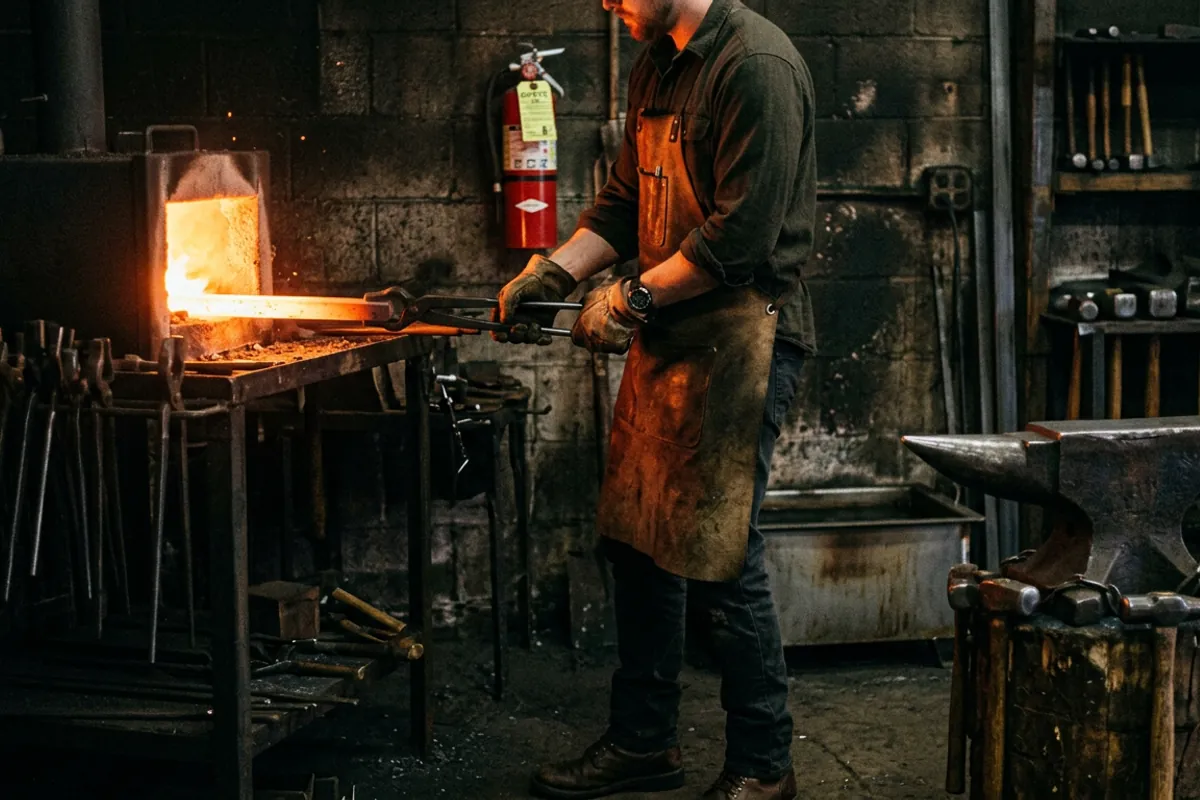
Eye protection rated ANSI Z87.1, on your face before the forge is lit, every time. A forge throws scale and UV, and the grinder that comes next throws worse. Natural fibers only near heat: cotton, wool, leather. Synthetics melt and stick to skin, and that is a burn that does not stop when you pull away. My full take on what to wear is in the safety gear guide, and none of it is expensive.
Two hazards specific to gas forges. First, carbon monoxide: a propane forge burns fuel and produces CO, so run it outdoors or under an open-sided roof with real airflow, never in a closed garage. This is the one that kills people who did everything else right. Second, the ceramic fiber blanket lining these forges: the fibers are a respiratory hazard, so wear a proper respirator when you assemble or repair the lining, and many smiths rigidize the blanket to lock the fibers down. Do not run your bare hand over fresh ceramic wool. Handle a hot bar with tongs that fit it, keep your quench oil at the right temperature and stand back from it, and keep a fire extinguisher within reach.
What I would tell a friend
Buy the single-burner propane forge and start forging this week. For a tight budget, the Simond Store single burner does everything a beginner needs, published at 2600 F with a 10 inch chamber, and you spend the savings on a decent anvil and tongs where it matters more. If made-in-USA and steadier support are worth the premium to you, the Hell's Forge single burner is the reasonable step up. Move to the Hell's Forge MAX double burner only when your work is genuinely longer than a single-burner box, and go in knowing the top-down burners trade a little heat evenness for that length.
Skip the coal forge as a first purchase unless you specifically want to learn fire management, in which case build a simple one before you buy a boxed rivet forge. Whatever you light, wear the eye protection, run gas outdoors, and respect the ceramic wool. Then go make something. For more on any of this, the forges hub collects the rest of what I have written, and the beginner getting-started guide covers the whole first-shop picture around the forge.