Verified three live ASINs and real forum threads. Writing the article now.
Here is the article:
If you are shopping for blacksmith tools for sale and you have never lit a forge, the honest news is that your first shop needs about five things, not fifty. An anvil with real steel under the face, one good hammer, one pair of tongs that fits your stock, a forge that gets steel to a working orange, and eye protection you will actually wear. Everything else is a want, and most of the "starter kits" you will see advertised pad the box with tools you will not touch for a year. I have been at this about twenty-five years, started self-taught on a length of railroad track clamped to a stump, and I still measure every anvil I meet against Bessie, my 148 lb Trenton. So this guide is the short list I would hand a weekend beginner, with picks weighed against published specs and what owners actually report, not against a bench test I did not run.
Let me say that part plainly up front: I do not own most of the specific models named below, and I will not pretend I do. Where I am speaking from my own shop, about how propane behaves or what a soft anvil face costs you, I will say so. Where I am leaning on owner consensus from the forums, I will say that too, and link it. That is the deal on this site.
What "blacksmith tools for sale" actually means
Search the phrase and you get a firehose: knife-making kits, Damascus billets, decorative tongs sets with six jaws you will never use, and a lot of cast-iron doorstops sold as anvils. The trap is buying by the picture. A shiny five-piece "black smith tools for sale" bundle looks like a deal until you notice the anvil is cast iron and the tongs do not close on any stock you own.
Here is the real starter list, in the order the money matters:
- An anvil, or an honest anvil substitute, with hardened steel under the face.
- One hammer, around 2 to 3 pounds, that fits your hand.
- One pair of tongs sized to your bar stock.
- A forge, coal or propane, that heats your work evenly.
- ANSI Z87.1-rated eye protection, and natural-fiber clothing near the fire.
Get those five right and you can forge. If you want the fuller reasoning on the minimum kit, I wrote it out in the black smith tools you actually need to start. This guide is the buying-and-shopping companion to it.
The tools at a glance
Here is the field for a first shop, with only published figures. Where a maker does not state a number, I have written "not published" rather than guess at it.
Scroll horizontally to see all columns.
| Tool | Type | Key published spec | Material | Price tier |
|---|---|---|---|---|
| VEVOR single-horn anvil | Cast starter anvil | 66 lb | Cast steel | Budget |
| Seymour HB-3 | Cross pein hammer | 3 lb head, 16 in hickory handle | Forged steel head | Budget |
| Simond Store wolf jaw tongs | Blacksmith tongs | 16 in long, 2.5 in jaw | Forged steel | Budget |
| NC Tool Whisper Deluxe | Single-burner propane forge | Atmospheric, single burner | Steel shell, ceramic lining | Mid |
Prices move around and I will not print dollar figures for marketplace listings, so treat "tier" as the honest signal: budget means well under a couple hundred dollars, mid is a real appliance you will keep. Specs for the Whisper come from NC Tool's own catalog (nctoolco.com); the hammer and tong figures are from the makers' listings.
The anvil: buy weight and steel, not shape
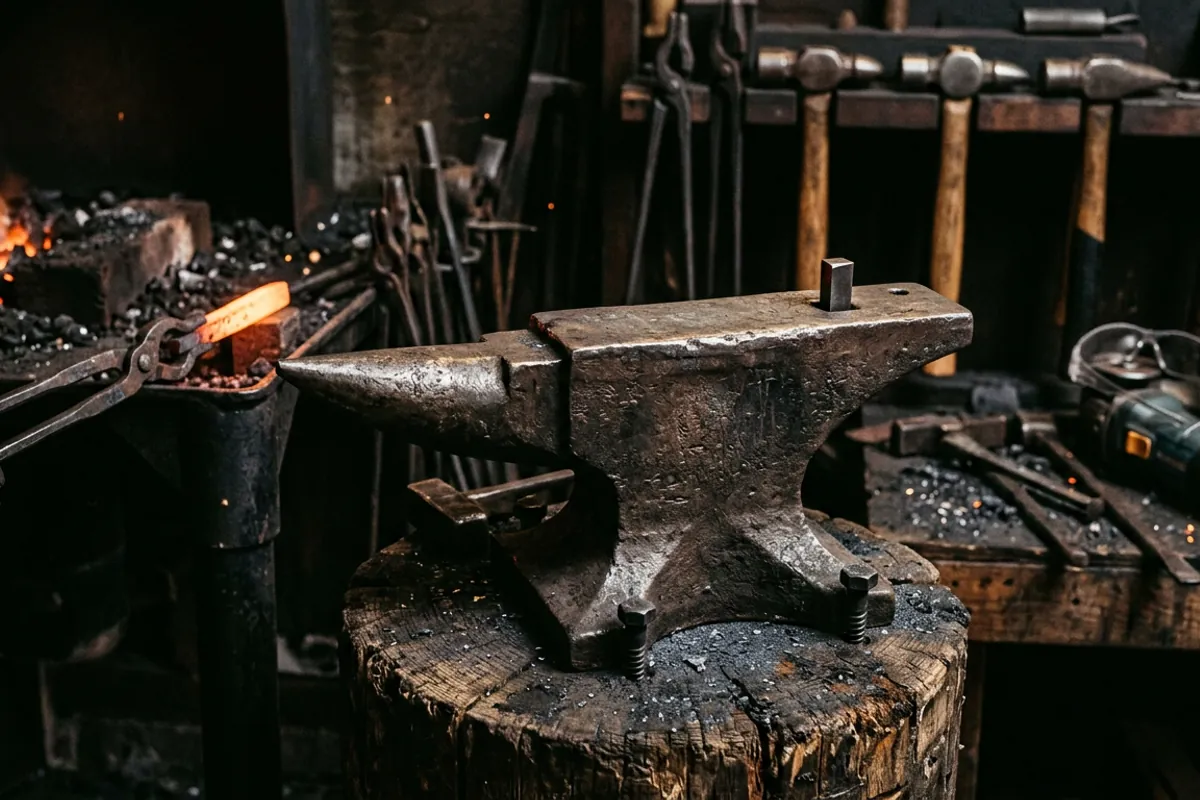
This is where beginners lose money, so slow down here. An anvil is not defined by its shape. It is defined by whether there is hardened steel under the face that throws the hammer back at you. Drop a ball bearing on a good anvil and it bounces most of the way back; drop it on a cast-iron anvil-shaped object and it dies with a thud. That rebound is you not fighting your own tool all day.
The cast-iron "anvils" that dominate cheap listings are the thing to walk away from. On I Forge Iron, the consensus on Harbor Freight and import cast anvils is blunt and consistent: cast iron with a rough face and a belly in the middle, not durable enough to bother with (I Forge Iron, "Thoughts on harbor freight anvils"). When Harbor Freight started advertising a "cast steel" anvil, the forum's reaction was cautious even then, because the phrase on the box does not tell you the heat treat (I Forge Iron, "So Harbor Freight says they have a cast steel anvil now").
If you are buying new on a tight budget, a cast-steel starter anvil in the 66 lb range is a real, if small, working tool. It will move steel, it will ring, and it will get you forging while you hunt for a heavier used anvil. Just know the tradeoff going in: light anvils bounce around and want to be bolted down or set in a stump, and a small face limits big work.

My honest preference for anyone with patience is to skip the new-cheap tier entirely and buy a used American or European anvil by the pound. A 100 to 150 pound old Trenton, Peter Wright, or Hay Budden with a decent face will outlast you and hold its value. I laid out how to shop that market without buying a paperweight in how to buy an anvil without wasting your money, and it is worth the read before you spend a dime. But if new-and-now is the only option, a cast-steel anvil beats any cast-iron one at the same price every time.
The hammer: one good cross pein
You need one hammer to start, not a wall of them. A cross pein in the 2 to 3 pound range covers almost everything a beginner does: the flat face for drawing and flattening, the pein for spreading metal in one direction. Heavier is not better here. If the hammer is too heavy for your arm, your elbow and shoulder will tell you within a month, and tendinitis is not a beginner rite of passage, it is a mistake.
The Seymour HB-3 (paid link) is the plain, checkable pick in this tier: a 3 pound forged head on a 16 inch hickory handle, the kind of hardware-store-lineage cross pein that smiths have started on for decades. It is not a boutique Swedish pattern with a perfectly crowned face, and the common owner note is that the handle can arrive a touch loose and the face wants a little dressing on your grinder before first use. For the money, that is fair. Knock the sharp factory edges off the face with a light radius so you are not leaving hammer marks in your work, and it will serve.
If your arm is on the smaller side, look for the 2 pound version of the same pattern instead. The hammer that fits your hand beats the hammer somebody online swears by. I go deeper on face geometry and weight in the blacksmith hammer I would hand a beginner.
The tongs: the pair that fits your stock
Tongs are the tool beginners underbuy and then curse. The single most useful lesson: a pair of tongs grips one range of stock. A wolf-jaw pattern is the closest thing to a do-everything first pair because the stepped jaws hold flat, square, and round bar across a range, which is why it is the standard first recommendation.
The Simond Store 16 inch wolf jaw tongs (paid link) are the common budget pick, forged steel, 16 inches long with about a 2.5 inch jaw. The honest read from owners is that import tongs almost always need fitting: you heat the reins and the boss and adjust the jaws so they actually close flat on your bar, because out of the box the alignment is hit or miss. That is normal for tongs at this price, and learning to adjust a pair of tongs is a genuine beginner skill, not a defect you should fear.
One warning that matters: tongs that do not grip are a safety problem, not just an annoyance. Loose tongs drop hot steel, and hot steel finds your foot. Fit them cold-check first by closing them on a piece of your actual stock and giving it a hard shake before that stock is ever hot. For the fuller rundown on jaw patterns and sizing, see the blacksmith tongs I would buy first.
The forge: coal or propane
This is the fork in the road, and I have run both fuels for years, so I will speak from the floor here. A coal forge gets hotter in a concentrated spot and is what I reach for on heavy stock and forge welding. A propane forge lights with a match and a valve, heats a chamber evenly, and handles the day-to-day work with none of the fire-tending or smoke. For a beginner in a garage or a neighborhood, propane is almost always the sane first forge. I walked through the whole tradeoff in coal or propane: which first forge makes sense.
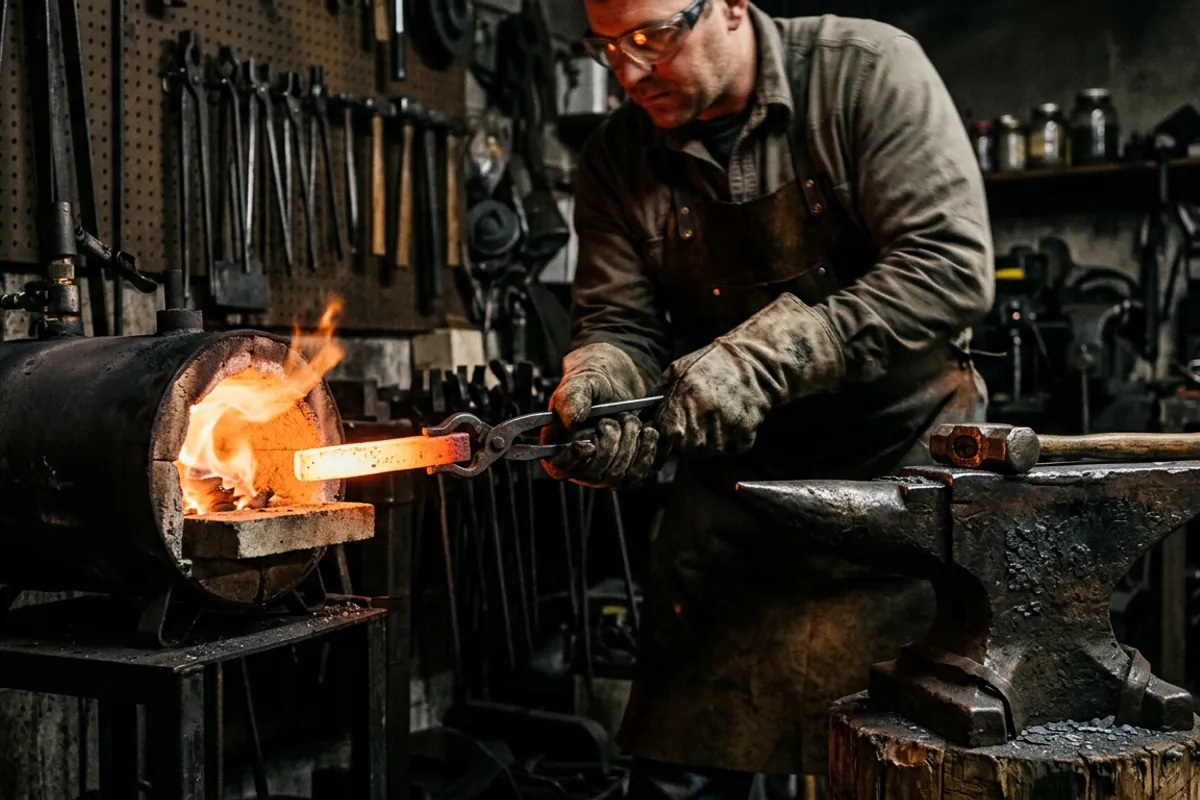
If you go propane and want to buy rather than build, the NC Tool Whisper Deluxe (paid link) is the model the forums point new smiths to over and over. It is a single-burner atmospheric forge from a maker that has been building forges for a long time, and the owner reputation is that it lights easily and holds an even heat for general work (NC Tool). It is a mid-tier appliance, not the cheapest box on the listing page, and that is the point: a forge is the one starter tool where the budget import single burners genuinely underperform, running cold or eating propane, per common forum complaints.
That said, plenty of good smiths start with a homemade propane forge for a fraction of the cost, and it is a legitimate first build. If you are handy, read the homemade forge I would build before you buy anything.
Whichever fuel you choose, ventilation is not optional. Propane and coal both produce carbon monoxide, and a forge belongs in an open or well-ventilated space, never a closed garage. That is a real hazard, not a formality.
Where to actually buy blacksmith tools
Once you know what good looks like, the where sorts itself out. Here is how I would rank the places blacksmith tools for sale actually turn up:
- Used and local first. Estate sales, farm auctions, Facebook Marketplace, and your regional blacksmithing club are where the real anvils and post vises hide, usually at half the price of new. A club is also where an experienced smith will look at a listing with you before you buy. This is the single best way to spend a tool budget.
- Dedicated blacksmith suppliers. Centaur Forge, Blacksmith Depot, Blacksmith Source, and NC Tool sell real gear chosen by people who forge. You pay more than a marketplace, but you are not gambling on whether the anvil is cast iron.
- Marketplaces, with your eyes open. Amazon and the like are fine for consumables and clearly specced hand tools like the hammer and tongs above. They are where the cast-iron ASOs live too, so buy by spec, never by the hero photo.
I put more on the supplier landscape in where the blacksmithing store really is. The short version: buy hand tools where it is convenient, buy your anvil where someone can vouch for the steel.
What owners say
For the specific models here, I am synthesizing owner reports rather than reporting my own bench test, so here is the honest signal.
On the cast-iron anvil question, the forum consensus is not thin at all, it is loud and repeated: I Forge Iron threads going back years steer beginners away from Harbor Freight and generic import cast anvils and toward used steel-faced anvils or an improvised anvil like a heavy chunk of upside-down rail (I Forge Iron, "Thoughts on harbor freight anvils"). If you take one thing from this guide, take that.
On import hand tools, the Simond-type tongs and hardware-lineage hammers draw the same measured verdict across the forums: usable, honest value, and expecting a little fitting is normal. The complaints cluster on out-of-the-box alignment and a factory face that wants dressing, not on the tools failing in use. That matches what I would expect from anything in this price tier.
On the NC Tool Whisper line, owner reputation is genuinely positive for a bought propane forge, which is why it is the repeated recommendation for new smiths who do not want to build. Where owner signal on a given import single-burner forge is thin or mixed, I have said so rather than dress it up. When the steel science comes up, on hardening a homemade anvil face or which steel to forge, I send people to real testing at Knife Steel Nerds rather than trusting shop lore, mine included.
What I would tell a friend
Buy the anvil last and buy it carefully, because it is the tool you will keep longest and the one most likely to burn your money if you rush. If you can wait, find a used steel-faced anvil in the 100 to 150 pound range through a club or a local sale. If you cannot wait, a cast-steel starter anvil is a real tool and a cast-iron one is not, full stop.
For the rest: one 2 to 3 pound cross pein, one pair of wolf-jaw tongs you have fitted to your stock, and a propane forge like the Whisper if you are buying or a homemade one if you are building. Skip the six-piece bargain bundles, skip anything advertised as an anvil that a magnet and a bounce test cannot confirm is steel, and do not skip the eye protection.
That is the whole starter shop. It is less than the marketplace wants to sell you, and it is enough to make real things. When you are ready to fill in the corners, the rest of the buying guides live under More from the shop.